
 Singapore
Travel Tools
Useful from the moment you arrive: check reference exchange rates or translate a local phrase.
Entry & Visa
Before travelling to Singapore, check whether your passport or travel document requires an entry visa. Requirements depend on the document you hold, your nationality and the purpose of your visit. Visa-free travel does not mean unconditional entry.
Travellers other than Singapore passport holders generally need a passport valid for at least six months. Short-term visitors should also be prepared to show onward travel arrangements and sufficient funds.
Most travellers entering Singapore must complete the free SG Arrival Card with an electronic health declaration within three days before arrival, including the arrival day. Some transit passengers and residents entering through land checkpoints are exempt.
If you need a visa, arrange it through an approved application channel before travelling. A visa permits you to seek entry but does not guarantee admission. Singapore immigration officers determine whether entry is granted and the permitted period of stay.
Check any applicable health requirements, especially if your journey includes a country with yellow fever transmission risk.
Visa overview
Singapore's visa requirements depend on the passport or travel document used. Many international travellers do not need a visa for a short visit, while holders of documents listed by the Immigration & Checkpoints Authority (ICA) must obtain one before travel.
Travellers requiring an entry visa may apply through ICA's approved channels, including eligible local contacts, authorised visa agents or Singapore overseas missions.
A Singapore entry visa is different from the Visit Pass granted at immigration. Your permitted stay is shown on the electronic Visit Pass (e-Pass) issued after entry.
Check ICA's official visa requirements for your specific travel document and visit purpose. Do not assume that another traveller's visa exemption or permitted duration applies to you.
Passport requirements
ICA requires travellers, except Singapore passport holders, to have at least six months of passport validity when entering Singapore. Every traveller, including children, must have an individually issued travel document.ICA requires travellers, except Singapore passport holders, to have at least six months of passport validity when entering Singapore. Every traveller, including children, must have an individually issued travel document.
Keep your passport in good condition and ensure that its details match your travel bookings and immigration declarations. Travellers using temporary, refugee or other special travel documents should check document-specific requirements with ICA or the appropriate Singapore overseas mission before departure.
eVisa / Visa on arrival
Singapore issues electronic visas (e-Visas) following successful applications through authorised channels. Travellers who require an entry visa must obtain the necessary approval before travelling; ICA does not accept visa applications at immigration counters.
Do not rely on obtaining a tourist visa on arrival.
A separate Visa-Free Transit Facility may allow certain eligible transit travellers to enter Singapore for up to 96 hours, subject to strict nationality, travel-document and onward-travel conditions. This is not a general visa-on-arrival arrangement.
An SG Arrival Card is neither an e-Visa nor an entry visa.
Arrival requirements
The SG Arrival Card (SGAC) is a free electronic arrival declaration, including health information. It must generally be submitted within three days before arrival, including the day of arrival.
Submission is required for foreign visitors entering Singapore, including those who do not need an entry visa.
Exemptions include travellers remaining in transit without clearing Singapore immigration, and Singapore citizens, permanent residents and long-term pass holders entering through land checkpoints.
Submit the declaration through ICA's official SG Arrival Card service or MyICA app. Use a valid email address, as foreign visitors receive their electronic Visit Pass information by email after clearing immigration.
Money & Payments
Singapore uses the Singapore dollar (SGD). Credit and debit cards are widely accepted at hotels, shopping centres, attractions and many restaurants, with contactless payment commonly available.
Carry some Singapore-dollar cash for smaller purchases, especially at hawker stalls, traditional markets and independent businesses where foreign cards may not be accepted. Some local QR payment services require accounts that short-term visitors may not have.
ATMs are available, but foreign transaction and withdrawal charges depend on your bank and the ATM operator. Check the exchange rate and any charges before withdrawing cash or accepting currency conversion.
Tipping is not customary. Some restaurants and hotels add a service charge, so check the bill before leaving extra money.
Foreign-issued contactless cards may also incur an administrative fee when used on Singapore's public transport network.
Related reading
How to Use Wise When TravellingLanguage & Communication
Singapore has four official languages: English, Malay, Mandarin Chinese and Tamil. Malay is the national language, while English is widely used in business, public transport, education and visitor services.
Most international travellers can manage everyday activities in English, including ordering food, asking for directions and communicating with hotel staff.
You may also hear Singlish, a local form of colloquial English influenced by Singapore's different languages and cultures. Some expressions may be unfamiliar even to fluent English speakers.
Signs at transport stations and major attractions are generally straightforward for English-speaking visitors.
For conversations involving detailed instructions or less familiar languages, a translation tool can help. Keep addresses and destination names available in writing when taking taxis or asking for directions.
SIM, Internet & Connectivity
Singapore has established mobile networks, and visitors can choose between international roaming, a local prepaid SIM or an eSIM.
Tourist SIM products are available from Singapore mobile providers. Prepaid SIM registration is compulsory, and visitors may need to provide their passport or other accepted identification. Registration conditions and permitted features can differ by provider and plan.
Before buying an eSIM, confirm that your phone supports eSIM activation, is not network-locked and works with the provider's available networks. Some travel eSIM products provide mobile data only, without a local telephone number.
Hotels, shopping centres, Changi Airport and selected public locations offer Wi-Fi. Singapore's Wireless@SG service also provides connectivity at participating public hotspots, subject to device and registration requirements.
If you rely on navigation or online bookings, arrange mobile data before leaving the airport.
Electricity & Plugs
Getting Around
Singapore's Mass Rapid Transit (MRT) network and public buses are practical options for reaching most visitor districts. The MRT connects major areas such as Marina Bay, Chinatown, Little India, Orchard Road and the airport.
From Changi Airport, passengers can take the MRT towards Tanah Merah or Expo and transfer to connecting lines. The airport MRT station is linked to Terminals 2 and 3; passengers using other terminals should check the airport's current transfer arrangements.
Public transport accepts supported contactless bank cards, mobile wallets and travel cards such as EZ-Link. Foreign-issued bank cards may attract administrative fees, so compare payment options for your trip.
Taxis and licensed private-hire cars are useful when carrying luggage, travelling with a group or arriving after trains have stopped operating. Airport charges, peak-hour surcharges and booking conditions can affect fares.
Walking is convenient within individual districts, but Singapore's heat, humidity and sudden rain can make longer journeys tiring. Plan routes around nearby MRT stations and sheltered walkways.
Safety & Emergency
Visitors should take normal precautions with valuables, personal documents and online transactions. Keep bags secure in crowded transport areas, shopping districts and major attractions.
Be cautious of unexpected messages or calls claiming to come from banks, police or government agencies. Singapore authorities warn against impersonation scams involving requests for money, banking credentials or installation of unfamiliar applications.
Local laws and public-space rules deserve attention. Smoking is prohibited in many public areas, including transport facilities and designated outdoor spaces. The purchase, possession and use of electronic vaporisers are illegal.
Follow posted instructions at transport stations, parks and public facilities. Avoid carrying prohibited or controlled goods across the border without checking the rules.
For urgent police assistance, call 999. For fire, rescue or emergency ambulance services, call 995. Check current official advisories before departure, as security, legal and operational information can change.
Emergency numbers: Police: 999 · Fire & Ambulance: 995
Health & Practical Information
Singapore has a hot, humid tropical climate. Drink water regularly, plan breaks during outdoor activities and take precautions against sun exposure. Public tap water is safe to drink without boiling.
Mosquito-borne illnesses, including dengue, are a health consideration. Use suitable mosquito repellent and follow National Environment Agency guidance, particularly when spending time outdoors.
Travellers who recently visited certain yellow-fever-risk countries, including qualifying airport transits, may be required to present a valid yellow fever vaccination certificate. Check ICA's requirements against your full travel history.
Some prescription and other medicines contain ingredients that require prior approval from Singapore's Health Sciences Authority. Check your medication before travelling and carry the required documentation.
Air quality may be affected by haze during some periods. Consult official air-quality advisories when planning strenuous outdoor activities.
Consider travel medical insurance suited to your circumstances, including treatment and emergency transport. Seek personalised medical advice from an appropriate professional before travel.
Related reading
Travel Insurance: Find the Right Cover for Your TripTravel Costs
High
Singapore offers options for different travel budgets, but hotel accommodation is often one of the largest expenses. Prices vary significantly by location, room category, booking date and demand around major events.
Staying close to an MRT station outside the main luxury hotel districts can be a practical way to manage accommodation and transport costs.
Hawker centres and neighbourhood food courts provide lower-cost alternatives to hotel dining and full-service restaurants. Eating at popular tourist attractions or upscale restaurants may increase spending.
MRT trains and buses are generally more economical choices than relying heavily on taxis or private-hire cars. Remember to account for possible foreign-card administrative fees.
Ticketed attractions, nightlife, shopping and optional guided experiences can substantially change the total cost of a visit.
Compare actual hotel rates and attraction prices for your travel dates rather than relying on fixed daily-budget estimates. Check whether quoted prices include applicable taxes and service charges.
Culture & Etiquette
Singapore's cultural life reflects its Malay, Chinese, Indian and other communities. Visitors can experience this diversity in neighbourhoods such as Chinatown, Little India and Kampong Gelam, as well as through local food, festivals and places of worship.
At temples and mosques, follow dress requirements, remove footwear where instructed and be considerate of people attending religious services. Ask before photographing individuals or ceremonies.
Public spaces generally follow clear rules. Queue in an orderly manner, observe public transport instructions and dispose of litter responsibly. At hawker centres, return used trays and crockery to designated stations and clear your table after eating. This is an enforced public-hygiene requirement.
You may notice diners reserving seats with small personal items, a local practice sometimes called "chope." Respect occupied tables and shared dining spaces.
Tipping is not generally expected. Politeness, consideration for others and attention to local signs are more useful than trying to follow a single set of cultural customs.
Climate / When to Visit
Singapore has a tropical climate, with warm temperatures, high humidity and rainfall throughout the year. Unlike destinations with four distinct seasons, Singapore's weather changes relatively little in temperature from month to month.
The Northeast Monsoon generally occurs from December to early March, with wetter conditions often developing during its earlier phase. The Southwest Monsoon usually lasts from June to September, while inter-monsoon periods occur around April–May and October–November.
Thunderstorms can develop quickly, especially during afternoons and evenings. Heavy rain may interrupt outdoor activities even during relatively drier periods.
There is no completely rain-free season. Visitors can enjoy Singapore year-round, but their preferred travel period may depend more on planned activities, events and tolerance for rain and humidity than on temperature.
Pack lightweight clothing, comfortable walking shoes, sun protection and a compact umbrella. Indoor venues can feel cool because of air-conditioning, so a light extra layer may be useful.
For outdoor gardens, walking routes or waterfront visits, check the forecast and leave room for schedule changes.
Useful Links
Guides to Singapore
See all Singapore Guides →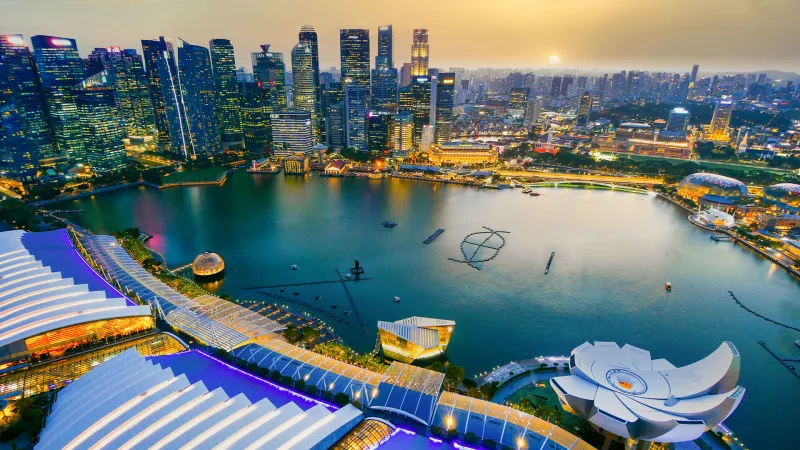
Frequently Asked Questions
Do I need a visa to visit Singapore?
Whether you need a visa depends on your passport or travel document. Some visitors can travel without an entry visa, while others must obtain one before departure. Check the Immigration & Checkpoints Authority's current visa-required document list. If a visa is required, it does not guarantee admission or determine how long you may stay. Immigration officers grant the permitted stay at entry, with the details recorded in your electronic Visit Pass.
Is the SG Arrival Card required, and does it cost anything?
Most travellers entering Singapore must submit the SG Arrival Card within three days before arrival, including the arrival day. Submission is free through Singapore's official immigration service or MyICA app. The arrival card is not a visa. Travellers remaining in transit without clearing immigration are exempt, as are Singapore citizens, permanent residents and long-term pass holders entering through land checkpoints. If you are visiting Singapore, check both the arrival declaration and any separate visa requirements.
What is the easiest way to travel from Changi Airport to the city?
The MRT is a practical option for travellers arriving during train operating hours. From Changi Airport MRT station, you can travel towards Tanah Merah or Expo and transfer to other rail lines. The station is connected to Terminals 2 and 3; other terminals may require an additional connection. Taxis and private-hire cars are alternatives when travelling with heavy luggage or arriving late at night. Check operating hours, your terminal and payment options before choosing.
Should I carry cash, or can I use cards everywhere?
Cards and contactless payments are widely accepted at hotels, shopping centres, major attractions and many restaurants. However, some hawker stalls, smaller shops and markets may not accept your foreign-issued card. Carrying a modest amount of Singapore-dollar cash is sensible. You can also use supported contactless bank cards on public transport, although foreign-issued cards may incur administrative fees. Check your bank's international transaction charges before travelling.
Can tourists buy a SIM card or eSIM in Singapore?
Yes. Mobile providers offer tourist prepaid SIM and eSIM products, while international travel eSIMs are another option. Local SIM registration is required, and visitors should have accepted identification, commonly a passport, available. Before buying, check whether your phone is unlocked, whether it supports eSIM, how long the plan remains valid and whether calls and SMS are included. Data-only plans may not provide a Singapore telephone number. Public Wi-Fi is also available at participating locations.
What electrical plug and voltage does Singapore use?
Singapore uses Type G electrical sockets with three rectangular pins, similar to those in the United Kingdom. The standard supply is 230 volts at 50 hertz. Travellers from countries using different plug shapes will usually need a travel adapter. Check the voltage rating on appliances such as hair dryers and styling devices, as a plug adapter does not convert electrical voltage. Many modern phone and laptop chargers support a range of voltages, but always confirm the device label.
Is Singapore safe to explore, and what emergency numbers should I know?
Visitors should still take sensible precautions, particularly with valuables, unexpected payment requests and online scams. Follow local laws and signs, including restrictions on smoking and electronic vaporisers. For police emergencies, call 999. For emergency ambulance, fire or rescue assistance, call 995. Singapore's ScamShield helpline, 1799, is available for scam-related questions but is not a replacement for emergency services. Check current official travel advice before departure.
When is the best time to visit Singapore?
Singapore is a year-round destination with consistently warm, humid weather. Rain is possible in every month, so there is no completely dry season. The Northeast Monsoon often brings wetter weather during part of the period from December to early March, while thunderstorms are common during the inter-monsoon periods. Choose your dates based on your activities, local events and travel budget rather than expecting a guaranteed dry month. Carry an umbrella and keep outdoor plans flexible.
What local etiquette should first-time visitors know?
Queue politely, keep public spaces clean and respect signs on trains and buses. At hawker centres, clear your table and return used trays and crockery after eating. Dress respectfully at places of worship, remove footwear where requested and avoid disturbing people during prayers. English is widely used, so most visitors can communicate without learning another language. Tipping is not generally expected, especially where a service charge is already included.

 India

 Vietnam

 South Korea

 Indonesia