
 South Korea
Travel Tools
Useful from the moment you arrive: check reference exchange rates or translate a local phrase.
Entry & Visa
Entry requirements for South Korea depend on your nationality, passport, purpose of travel and intended length of stay. Some visitors may enter without a visa under eligible short-stay arrangements, while others must obtain an appropriate visa before travelling.
Visa-exempt visitors may also need a Korea Electronic Travel Authorization (K-ETA). However, South Korea has temporarily exempted designated nationalities and regions from K-ETA requirements through 31 December 2026. Eligibility must be checked individually; the exemption is not a universal visa waiver.
Depending on your immigration status, you may need to complete the free electronic arrival card before entering South Korea. Carry a valid passport and keep your accommodation address, onward travel details and any visa or travel-authorization records accessible.
Review the current requirements using South Korea's official immigration, visa and K-ETA websites before departure, particularly if travelling in 2027 or later. Final admission remains subject to the immigration authorities at the port of entry.
Visa overview
South Korea has nationality-dependent visa-free entry arrangements for eligible short-term visitors. The permitted stay varies according to the relevant nationality and entry arrangement; not every traveller is eligible, and visa-free entry does not authorise unrestricted work or other activities.
Visitors who do not qualify for visa-free entry generally need the appropriate Korean visa before travel. Tourist and short-term visitor permissions have their own eligibility, supporting-document and application requirements.
South Korea's Visa Portal provides information about visa categories and application procedures. Not every visa category can be issued entirely online, and some applicants must complete the process through a Korean diplomatic mission or visa application centre.
Before booking a non-refundable trip, confirm the correct visa category, allowed stay and documentation for your passport and intended activities.
Passport requirements
Travel with a valid, undamaged passport that meets the requirements for your nationality and immigration status. Check the applicable remaining-validity rules directly with Korean Immigration or the Korean embassy or consulate responsible for your application rather than assuming that a universal six-month passport-validity rule applies.
Your passport details must match any Korean visa or K-ETA issued to you. If your passport is replaced, check whether a new visa or K-ETA application is necessary. Keep the passport available for airline checks, immigration procedures and other identity verification during your trip.
eVisa / Visa on arrival
K-ETA is an electronic travel authorization for eligible visa-free visitors; it is not an electronic visa or a visa on arrival. When K-ETA is required, approval must be obtained before boarding the relevant flight or ship. Approval does not guarantee admission to South Korea.
The Korean government has extended its temporary K-ETA exemption for designated nationalities and regions until 31 December 2026. Eligible travellers can still voluntarily apply for K-ETA, including to benefit from exemption from the arrival-card requirement, but the normal application fee applies.
As of October 2026, the official K-ETA application fee is KRW 10,000, plus any applicable online payment charge. Processing generally takes up to 72 hours but can take longer.
South Korea also operates a Visa Portal with online services for certain visa categories. Do not assume an ordinary tourist visa can always be obtained electronically or on arrival. Check the correct procedure for your passport through official immigration channels.
Arrival requirements
South Korea's electronic arrival card is submitted through the official government service at e-arrivalcard.go.kr. It is free and can be completed within three days before arrival.
Travellers required to submit the declaration include applicable visa holders and eligible K-ETA-exempt visitors. Valid K-ETA holders, Korean citizens, qualifying residence-card holders and certain other categories are exempt.
An electronic arrival card is an entry declaration, not a visa or travel authorization. It does not replace a required visa or K-ETA.
Check your status using the official e-Arrival Card eligibility guide before travelling. Be cautious of imitation websites that request payment for this free government declaration.
Additional health or quarantine procedures may apply in specific circumstances; check current official instructions if relevant to your journey.
Money & Payments
South Korea uses the South Korean won (KRW), written as ₩. Bank cards are widely accepted at hotels, department stores, established restaurants and many shops, particularly in larger cities. Nevertheless, carrying some local cash is useful for traditional markets, smaller businesses and situations where an overseas card is not accepted.
International debit and credit cards can be used at many ATMs, but availability and fees depend on the bank, card issuer and machine. Look for an ATM that supports international cards, and check withdrawal or foreign transaction fees before accepting a transaction. Where a payment terminal offers currency conversion, paying in Korean won generally lets your own card provider handle the exchange rate.
Public transport has its own payment arrangements. Prepaid cards such as Tmoney can be convenient for local buses and subways, but they are not a universal substitute for tickets on every intercity or high-speed train. Some transport cards also have particular purchase or top-up requirements.
Tipping is not normally expected in restaurants. For budgeting, compare accommodation, intercity transport and attraction costs for your actual dates, especially during busy holidays.
Related reading
How to Use Wise When TravellingLanguage & Communication
Korean is South Korea's principal language, written using the Hangul alphabet. English-language information is commonly available at major airports, large railway stations, many tourist attractions and international hotels, but English communication cannot be assumed in smaller restaurants, local markets or rural areas.
Save your accommodation's name and address in Korean, particularly when taking taxis or travelling beyond major cities. A translation tool can be useful for restaurant menus, transport enquiries, dietary requirements and other everyday situations.
Useful phrases include annyeonghaseyo (hello), gamsahamnida (thank you) and joesonghamnida (sorry or excuse me). Even a few polite expressions can make interactions easier.
For navigation, consider map services that provide detailed local Korean transport information. Download any essential route instructions and travel documents before leaving reliable internet coverage.
The Korea Tourism Organization also operates the multilingual 1330 Travel Helpline for visitor information and interpretation assistance.
SIM, Internet & Connectivity
South Korea has well-developed mobile networks and internet access in major cities. Visitors can arrange mobile connectivity through international roaming, a local prepaid SIM, a compatible travel eSIM or a portable Wi-Fi device.
Mobile carrier counters at major airports, including Incheon and Gimpo, offer visitor services. Some tourist SIM and eSIM products can be purchased online before arrival, although the activation process, identity requirements, data allowance and voice-call support vary by provider.
Before purchasing an eSIM, check that your phone supports the technology and is not network-locked. A data-only eSIM may provide internet access without a Korean telephone number or ordinary voice-call service, which can matter for restaurant reservations and local verification systems.
Public Wi-Fi is available in many transport and commercial locations, but avoid relying on it for every journey. Keep offline copies of accommodation addresses, transport bookings and essential documents.
Mobile coverage is generally strong in developed areas, although reception can vary in mountains, remote coastal locations and certain indoor spaces.
Electricity & Plugs
Getting Around
South Korea's public transport network makes it practical to visit major cities without renting a car. Seoul and its surrounding metropolitan area have extensive subway and bus services, while cities including Busan, Daegu, Daejeon and Gwangju have urban rail systems.
Many international travellers arrive at Incheon International Airport, which is connected to Seoul by the Airport Railroad (AREX). Its Express Train runs directly to Seoul Station, while the All-Stop Train serves intermediate stations such as Hongik University. Airport buses and taxis may be more convenient for accommodation away from rail connections. Check the correct arrival terminal before choosing a transfer.
Rechargeable transport cards, including Tmoney and EZL, are widely used for eligible local buses and subway journeys. Seoul also offers visitor transport-pass options, but coverage restrictions should be checked before purchasing.
For longer journeys, KTX high-speed trains connect major destinations, including Seoul and Busan. KORAIL operates an official international booking website, and intercity buses provide additional routes.
Jeju Island requires separate planning. Public buses cover many areas, but attractions can be widely dispersed, making organised excursions or appropriate car hire useful for some itineraries. Foreign drivers must meet Korean licensing requirements.
Check current schedules and reserve popular intercity journeys in advance, particularly during Seollal and Chuseok holidays.
Safety & Emergency
South Korea is generally straightforward to navigate as an independent traveller, but ordinary precautions remain important. Keep valuables secure in crowded transport areas, exercise care around nightlife districts and use recognised taxis or transport services.
Road traffic follows the right-hand side. Pedestrians should use designated crossings and remain attentive to vehicles, including turning traffic. If renting a car, check the accepted driving-permit requirements and your insurance coverage.
Weather is another important consideration. Heavy summer rainfall can cause flooding or transport disruption, while tropical storms may affect coastal areas, particularly during the warmer months. Mountain hiking requires appropriate preparation, especially in winter or unsettled weather. Check official forecasts, trail restrictions and local alerts.
For emergencies, call 112 for police or 119 for ambulance and fire services. Ask for English-language interpretation if needed. For non-emergency tourist information and interpretation assistance, the Korea Tourism Organization operates the 1330 Travel Helpline, including +82-2-1330 from overseas.
Keep your accommodation address and emergency contacts accessible. Follow official guidance for natural disasters, civil alerts and restrictions near sensitive military or border areas.
Emergency numbers: Police: 112; Ambulance: 119; Fire: 119
Health & Practical Information
Before travelling to South Korea, review your routine vaccinations and destination-specific health advice with a qualified healthcare professional. Recommendations can depend on your age, vaccination history, length of stay and planned activities. Additional considerations may apply to extended rural stays, hiking or outdoor work.
Modern hospitals and medical facilities are available in major cities, including international patient services at some larger hospitals. Treatment can still be expensive for visitors without suitable insurance, so consider travel medical cover that includes your intended activities and any necessary evacuation arrangements.
Carry essential prescription medicines in their original packaging, along with appropriate documentation. Check Korean customs and medicine-import rules in advance, particularly for controlled medications.
During summer, manage heat and humidity, stay hydrated and take precautions against mosquito and tick bites when outdoors. In spring, monitor air-quality conditions if you are sensitive to fine dust.
Call 119 for a medical emergency. The 1339 service provides infectious-disease-related guidance rather than replacing ambulance dispatch.
Related reading
Travel Insurance: Find the Right Cover for Your TripTravel Costs
Moderate
The cost of travelling in South Korea depends on your route, accommodation choices, travel season and the activities you include. Central Seoul hotels, popular shopping and entertainment districts, weekend stays and peak travel periods can raise the overall budget.
Local subway and bus journeys are often practical ways to control transport spending, while ordinary restaurants, markets and casual dining offer alternatives to higher-priced visitor-focused establishments. Accommodation outside the busiest areas may offer better value, provided the transport connections suit your plans.
Travelling between cities adds costs for KTX trains, express buses or domestic flights. On Jeju Island, vehicle rental, taxis or organised excursions may form a larger part of the budget than in Seoul.
Seollal, Chuseok and popular spring or autumn travel periods can affect accommodation availability and transport bookings.
Before departure, price your accommodation and intercity journeys for the actual dates. Build a budget covering food, local transport, attractions, mobile data and an allowance for unexpected expenses. Use TravelGoCo's Currency Converter for approximate won conversions, checking the displayed exchange-rate timestamp.
Culture & Etiquette
Courtesy and consideration are important parts of everyday life in South Korea. A polite greeting or slight bow is appreciated in many situations, and using both hands when giving or receiving an important item can be a respectful gesture.
Remove your shoes when entering a home and in restaurants or traditional accommodation where this is expected. At temples, royal heritage sites and other culturally important places, follow posted instructions, respect restricted areas and ask before photographing people or ceremonies.
Korean dining offers everything from street food and casual restaurants to traditional multi-course meals. Shared dishes are common, and restaurants may provide metal chopsticks and a spoon. Tipping is generally not expected.
Two particularly important holidays are Seollal, the Lunar New Year, and Chuseok, the autumn harvest holiday. Families often travel across the country during these periods, increasing demand for intercity trains and buses. Some smaller businesses close or change operating hours, while selected attractions may run special programmes.
Other occasions, including Buddha's Birthday and National Foundation Day, can bring cultural events or changes in opening arrangements. Always check the relevant year's holiday calendar before finalising transport and accommodation.
Climate / When to Visit
South Korea has four distinct seasons, but weather conditions vary between inland cities, mountain regions and southern coastal destinations.
Spring, generally from March to May, brings milder conditions and seasonal flowers. Cherry blossoms attract many visitors, although their timing changes from year to year and differs by region. Airborne dust and occasional cooler weather can still affect outdoor plans.
Summer, from June to August, is often hot and humid. The main rainy period usually affects parts of the country around late June and July, while typhoons or heavy rainfall can disrupt travel during the warmer months, particularly in coastal areas.
Autumn, from September to November, is popular for cooler temperatures, mountain scenery and colourful foliage. Exact foliage timing depends on elevation and weather conditions.
Winter, from December to February, can be very cold, especially in Seoul and mountainous areas, with snow and icy surfaces possible. Busan and Jeju often experience milder conditions than northern inland areas but can still be windy and chilly.
For comfortable city sightseeing, many travellers favour spring or autumn. For skiing, winter is more suitable; for beaches, summer may appeal despite its humidity and rain risks. Check regional forecasts before travelling.
Useful Links
Guides to South Korea
See all South Korea Guides →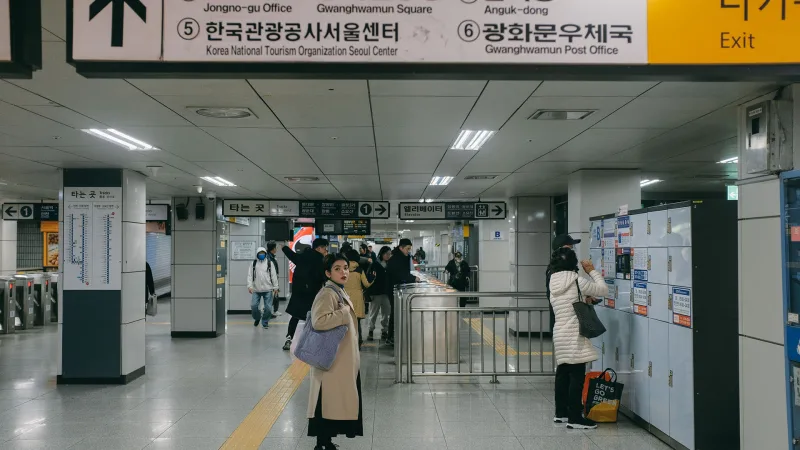
Frequently Asked Questions
Do I need a visa to visit South Korea?
Visa requirements depend on your nationality, the purpose of your visit and the intended length of stay. Some passport holders qualify for short-term visa-free entry, while others must obtain a visa before travelling. Visa-free eligibility does not automatically mean that K-ETA is unnecessary. Check the Korean Immigration Service and official K-ETA website for the rules that apply to your passport.
Is K-ETA required for South Korea in 2026?
South Korea has temporarily exempted designated nationalities and regions from K-ETA requirements through 31 December 2026. Travellers outside the exemption who are otherwise eligible for K-ETA may still need approval before boarding. The temporary exemption does not make visa-required visitors visa-exempt. Check your nationality's current status on the official K-ETA website, particularly if travelling in 2027.
Is the South Korea e-Arrival Card mandatory?
Many foreign visitors, including applicable visa holders and K-ETA-exempt travellers, must complete South Korea's electronic arrival declaration. Valid K-ETA holders and certain other categories are exempt. The official e-Arrival Card is free and can be submitted within three days before arrival. Check your status at e-arrivalcard.go.kr and avoid websites that charge for this free government service.
What is the best time to visit South Korea?
Spring and autumn are popular for outdoor sightseeing, seasonal flowers and foliage. Summer is warmer and more humid, with periods of heavy rain, while winter is colder and suitable for certain snow activities. Conditions differ between Seoul, Busan, Jeju and mountainous areas. Choose the season according to your planned destinations and activities, and check the local forecast before travelling.
Can I use credit and debit cards in South Korea?
International cards are accepted at many established hotels, shops and restaurants, especially in larger cities. However, some smaller businesses and payment systems may not accept overseas cards. Carry some Korean won for traditional markets and unexpected expenses. Check overseas transaction fees and ATM compatibility with your bank before departure. Local transport may require a separate prepaid card or ticket.
How do I travel from Incheon Airport to Seoul?
Incheon International Airport is connected to Seoul by the Airport Railroad (AREX). The Express Train travels directly to Seoul Station, while the All-Stop Train serves intermediate stations, including Hongik University. Airport buses and taxis are alternatives depending on your hotel's location, luggage and arrival time. Check whether your flight arrives at Terminal 1 or Terminal 2 before selecting a service.
Can tourists use Tmoney cards in South Korea?
Yes. Tmoney is a rechargeable transport card accepted on many local subways and buses, and at other participating services. Visitors can purchase cards at authorised sales points and recharge them according to the card's rules. A Tmoney card is not an unlimited travel pass, and it does not replace tickets for every high-speed or intercity rail service. Check payment arrangements for each journey.
Is English widely spoken in South Korea?
English-language signs and visitor information are common at major airports, many railway stations and popular attractions. However, spoken English proficiency varies, particularly outside international hotels and busy tourist areas. Saving your accommodation address in Korean and using a translation tool can make local journeys, restaurant visits and everyday communication easier. The 1330 tourist helpline also offers multilingual assistance.
What power plug adapter do I need for South Korea?
South Korea generally uses Type C and Type F round-pin electrical connections, with a standard supply of 220 V at 60 Hz. Travellers whose plugs are not compatible will need a suitable adapter. Check your device's voltage label before connecting it. An adapter changes the plug shape but does not convert voltage, so devices that cannot operate at 220 V may need additional equipment.
What emergency numbers should I know in South Korea?
Call 112 for police assistance and 119 for fire or ambulance emergencies. For non-emergency tourist information, translation assistance or travel-related enquiries, the Korea Tourism Organization operates the 1330 Travel Helpline. Keep your accommodation's address available in Korean and explain your location clearly when requesting help. Travellers should also review applicable travel insurance and emergency contact arrangements before departure.

 India

 Vietnam

 Indonesia

 Thailand