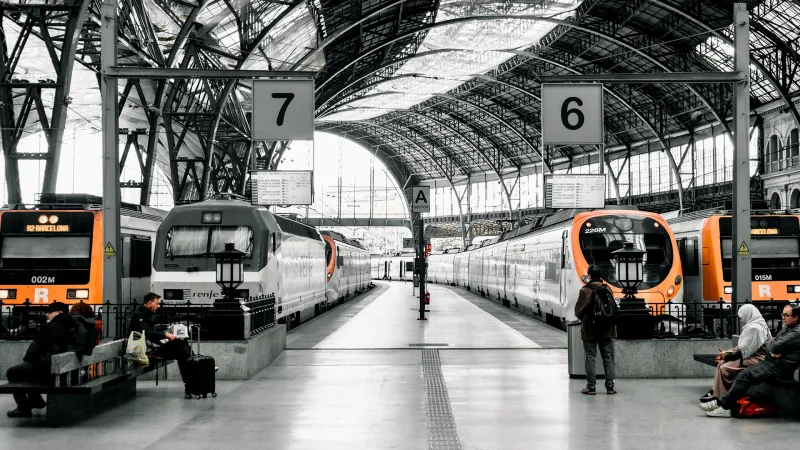

Arriving in Seoul for the first time can feel exciting and a little overwhelming. There are several ways to reach the city from the airport, a subway network that covers an enormous area, and different transport cards and passes to choose from. You may already have your hotel booked and a list of neighbourhoods you want to explore. But before getting there, you need to decide whether to take the airport train or a bus, how to pay for the subway, and which route will actually get you closest to your accommodation. Fortunately, South Korea's transport system is relatively easy to use once you understand a few practical differences. This guide takes you from your arrival at Incheon or Gimpo Airport to your first journeys around Seoul, with advice on tickets, navigation apps, local payments and travelling beyond the capital.
Before flying: check your arrival documents
South Korea's entry requirements depend on your passport nationality, visit purpose and immigration status. Some visitors qualify for visa-free entry, while others need a visa before travelling. Eligible visa-free travellers may also be subject to the Korea Electronic Travel Authorization, known as K-ETA. As of October 2026, designated nationalities and regions remain temporarily exempt from K-ETA until 31 December 2026. The exemption is not universal, and it doesn't replace a visa for someone who requires one. South Korea also has a free electronic arrival declaration for applicable travellers. It can be submitted through the official government website within three days before arrival. Some visitors, including valid K-ETA holders, are exempt. Check the requirements using the official immigration and K-ETA services before departure. Keep your passport, accommodation address and any required authorization records accessible. This Guide concentrates on the journey after arrival. For wider entry and visa information, consult TravelGoCo's South Korea Country page.
Incheon or Gimpo: which airport are you using?
Seoul's two main passenger-airport gateways serve different travel needs. Incheon International Airport (ICN) handles a large share of international long-haul flights and has two passenger terminals, Terminal 1 and Terminal 2. Gimpo International Airport (GMP) is closer to central Seoul and is important for domestic flights and certain international routes. Both airports connect to Seoul's public transport system, but the routes are different. If you're arriving at Incheon, you'll usually choose between the Airport Railroad, an airport limousine bus or a taxi. If you're arriving at Gimpo, the subway and Airport Railroad All-Stop Train offer several useful connections. Always check the airport code, arrival terminal and your hotel's nearest station before deciding how to travel.
| Airport or service | Main connection | Best suited for |
| Incheon Airport Terminal 1 (ICN) | AREX Express, AREX All-Stop, airport bus or taxi | International arrivals at Terminal 1 |
| Incheon Airport Terminal 2 (ICN) | AREX Express, AREX All-Stop, airport bus or taxi | International arrivals at Terminal 2 |
| Gimpo Airport (GMP) | AREX All-Stop, Seoul subway or airport bus | Domestic flights and eligible regional international flights |
| AREX Express | Nonstop airport rail service to Seoul Station | Travellers heading to Seoul Station or nearby connections |
| AREX All-Stop | Airport rail service with intermediate stations | Travellers staying near Hongik University or other served stations |
AREX Express Train: the direct journey to Seoul Station
The Airport Railroad Express Train is one of the simplest ways to reach central Seoul from Incheon International Airport. It runs directly between the airport and Seoul Station without stopping at intermediate stations. The journey takes approximately 43 minutes from Terminal 1 or 51 minutes from Terminal 2. As checked in October 2026, the operator lists the adult Express Train ticket at KRW 13,000. Fares, discounts and operating arrangements can change, so confirm the price for your travel date. The Express Train has reserved seating and dedicated ticketing. You can purchase tickets through the official Airport Railroad service or its authorised sales facilities. This is especially convenient when your hotel is near Seoul Station or when you'll be connecting to another train. However, travelling quickly to Seoul Station doesn't necessarily give you the fastest overall journey. If your hotel is elsewhere, consider how long the next subway connection or taxi journey will take.
AREX All-Stop Train: useful for Hongdae and other stations
The AREX All-Stop Train travels along the airport railway corridor but calls at intermediate stations. These include Gimpo International Airport, Digital Media City and Hongik University before Seoul Station. The journey from Incheon Terminal 1 to Seoul Station takes approximately 59 minutes, while Terminal 2 takes approximately 66 minutes under the published service pattern. For visitors staying around Hongdae, the All-Stop Train is particularly useful because it stops at Hongik University Station. It can also provide convenient transfers to other subway services along the route. Unlike the Express Train, the All-Stop service works with eligible local transport cards and ordinary airport-rail ticketing arrangements. If you're carrying heavy luggage, check how far the walk will be from the station to your accommodation. A direct train is helpful, but a long walk with suitcases may still make an airport bus or taxi more attractive.
Airport limousine buses and taxis
An airport limousine bus can be a convenient alternative to the railway, particularly if it stops near your hotel. These buses serve different areas of Seoul, including many hotel districts and major transport connections. The best route depends on the bus stop closest to your accommodation. Check the operator's current route, departure terminal, luggage allowance and schedule before buying a ticket. At Incheon Airport, official bus ticket counters and machines are available in the designated terminal transport areas. A taxi may be more comfortable if you're travelling with children, have several suitcases or are arriving after the most convenient train service has stopped running. Use the authorised airport taxi ranks or a recognised taxi-booking service. Check the vehicle size, estimated cost and any applicable late-night or toll charges. For a group, compare the total cost of a taxi against several individual airport train tickets plus the onward journey to your hotel.
Arriving at Gimpo Airport
Gimpo Airport is connected to the Airport Railroad All-Stop service and several urban rail lines, including Seoul Subway Lines 5 and 9. This provides convenient connections to different parts of Seoul without travelling all the way to Seoul Station. For example, if you're staying around Hongdae, the Airport Railroad offers a relatively straightforward rail connection. If your accommodation is near a station on Line 5 or Line 9, that route may be more suitable. Check the actual station exit and any luggage-related accessibility needs before travelling. If you're transferring between Gimpo and Incheon airports, the Airport Railroad is one available option. However, allow enough time for the complete terminal-to-terminal journey, baggage collection, check-in and immigration procedures. A connection involving two airports needs considerably more planning than a normal subway transfer.
Where should first-time visitors stay in Seoul?
A good Seoul hotel isn't necessarily the one closest to a famous landmark. Transport connections can make a much bigger difference to your trip, especially when you're arriving with luggage or planning several days of sightseeing. Myeongdong is popular with visitors because of its shops, restaurants and access to central attractions. Hongdae offers cafés, shops, entertainment and a lively atmosphere around Hongik University. Insadong and the nearby Jongno area suit travellers interested in historic streets, cultural attractions and traditional neighbourhoods. Seoul Station is practical for airport train connections and some intercity travel, although it may not be the most convenient base for every visitor. Gangnam is another option, particularly if your plans focus on southern Seoul. Check the exact station exit, walking distance and number of transfers rather than relying only on the district name shown on a hotel listing.
| Area | Main appeal | Transport consideration |
| Myeongdong | Shopping, dining and central sightseeing | Useful subway access; busy pedestrian streets |
| Hongdae | Cafés, nightlife and youthful atmosphere | Hongik University Station serves AREX All-Stop and subway connections |
| Insadong and Jongno | Traditional streets, palaces and cultural attractions | Several nearby subway stations depending on accommodation |
| Seoul Station | Airport Express and intercity rail convenience | Good for rail connections; hotel location still matters |
| Gangnam | Shopping, restaurants and southern Seoul districts | May require a longer journey from some northern attractions |
Understanding Seoul's subway system
Seoul's subway is one of the most useful transport options for visitors. Lines are identified by numbers, names and colours, while station signs commonly include English alongside Korean. Major interchange stations connect several services, and route maps show the direction of travel using the line's destination stations. The most important detail is to check the correct platform direction. A station can have several underground levels and multiple exits, sometimes separated by a substantial walk. When planning a journey, look at the destination station, transfer points and recommended exit rather than only the number of stops. Seoul's urban rail network also extends beyond the city itself into surrounding areas. Some longer journeys have different fares or are outside the coverage of certain visitor passes. For easier planning, use a local navigation app with up-to-date station and exit information.
Tmoney cards: a simple option for local travel
Tmoney is a widely used rechargeable transport card that works on eligible local subway and bus services. It can save you from purchasing an individual ticket for every journey and makes permitted transfers between services more convenient. Cards are sold at participating convenience stores and other authorised locations. After purchasing a card, add a suitable amount of stored credit before travelling. The card itself and the travel balance are separate costs. Tmoney can also be used at participating retail businesses, but acceptance varies. For most visitors who plan to take several ordinary subway and bus journeys, it is a practical starting point. However, an ordinary Tmoney balance isn't the same thing as an unlimited transport pass. It doesn't automatically cover the AREX Express Train, KTX high-speed trains or every special transport service.
Can you top up Tmoney with an international bank card?
Don't assume that an overseas debit or credit card will work for every transport-card purchase or recharge. The Korea Tourism Organization's 2026 transport-payment guidance advises that ordinary Tmoney purchases and top-ups at many sales points require Korean won cash. Some newer ticket machines and other transport products support foreign-issued cards, but availability differs by card type, machine and service. This distinction is important: being able to buy a subway ticket with a foreign bank card doesn't necessarily mean you can recharge an ordinary Tmoney card using that same card. Keep some local cash available when arriving, and check the payment options displayed at the actual machine or counter.
What about Seoul's short-term Climate Card?
Seoul offers short-term Climate Card passes for eligible unlimited public transport journeys during a selected period. These can be useful when you're making frequent journeys on covered Seoul subway and bus services. The available short-term passes include one, two, three, five and seven days. As of October 2026, the Seoul Metropolitan Government lists prices of KRW 5,000, 8,000, 10,000, 15,000 and 20,000 respectively. The physical card has a separate purchase cost. The older 30-day prepaid Climate Card has been discontinued, so visitors shouldn't rely on outdated articles describing it as a normal current purchase option. The short-term pass has geographic and service restrictions. It doesn't provide unrestricted travel on every railway line, airport bus or transport service outside Seoul. The AREX Express Train is not covered. Some eligible journeys on the AREX All-Stop network have special coverage rules, including restrictions on where you may board or exit at Incheon Airport. If your journey involves Incheon Airport, don't assume that holding a Climate Card alone is sufficient. Check the exact route and pass conditions before using it.
How to use the subway and buses correctly
- Check your route, destination station and any required transfers.
- Make sure your Tmoney or other accepted transport card has enough balance or a valid pass.
- Touch your card at the entrance reader before boarding a subway train.
- Follow the line colour and train direction shown on the platform signs.
- When changing trains, follow the transfer signs and the route guidance.
- Touch out using the correct card at your destination.
- When boarding a city bus, tap the card at the entry reader.
- Tap again when leaving the bus, particularly to ensure the correct fare and eligible transfer benefits.
- Keep your card accessible when entering or leaving transport areas.
- If you're uncertain about a fare or station exit, ask station staff rather than forcing your way through a barrier.
How bus and subway transfer discounts work
South Korea's transport cards can provide discounts when combining eligible bus and subway journeys. In Seoul, the standard transfer rules generally allow a qualifying connection within 30 minutes of leaving the previous service during the day, with a longer window during designated nighttime hours. The exact rules depend on the services, distance and transport authority. Tapping off a bus is important because the system may need to record the end of your journey for the next eligible transfer. Not every transfer is free. A longer journey or a service with a different fare structure can produce an additional charge. Cash fares also do not normally provide the same integrated transfer benefits. If you plan to use both buses and subways, a suitable transport card is often more convenient than buying separate tickets.
Navigation apps that make Seoul easier
A good navigation app can make an enormous difference when travelling in South Korea. Naver Map and KakaoMap are popular local mapping services that provide public transport routes, walking directions and information about local businesses. They can be especially useful for locating a specific subway exit, finding the right bus stop or checking a journey across several train lines. Naver Map offers English and other language options, although some business names or local details may still appear in Korean. Before travelling, save your hotel's Korean-language address and the names of important destinations. When taking a taxi, showing the destination in Korean can help avoid confusion. You can also use translation apps for restaurant menus and everyday communication. Don't depend entirely on an unfamiliar mapping service without checking whether it provides useful local walking and public transport directions for your planned routes.
Taxis, payment cards and mobile data
Seoul's trains cover many popular destinations, but taxis can be useful late at night, with luggage or when travelling to places far from convenient subway stations. Official taxis can be hailed from suitable streets or booked through supported services. The Korea Tourism Organization highlights k.ride as one option designed to help international visitors book taxis, with supported foreign card payments. Always check the pickup location, vehicle details and estimated fare arrangement before beginning a journey. Keep some Korean won available for smaller purchases and transport-card top-ups, even if you normally use bank cards. Mobile internet is particularly useful for navigation, translations and ride bookings. Compare roaming, visitor SIMs and compatible travel eSIMs before departure. If you need a Korean telephone number for local bookings, check the plan's actual voice and messaging capabilities. A data-only eSIM may not meet those needs.
Travelling beyond Seoul: KTX trains and other cities
If you're planning to visit Busan, Gyeongju or other destinations beyond the capital, intercity rail can be a practical option. KORAIL operates KTX high-speed services on several routes, including connections between Seoul and Busan. You can search for routes, availability and fares through KORAIL's official international booking website. Check the actual departure station, because not every train uses the same terminal. A KORAIL PASS may suit some foreign visitors planning multiple eligible long-distance journeys, but it's not automatically cheaper than individual tickets. It also doesn't cover every rail operator, subway service or special train. South Korea has other rail operators, including SRT, with separate ticketing arrangements. Book important long-distance journeys earlier when travelling around Seollal, Chuseok or other busy holiday periods.
Three practical arrival and travel situations
Arriving at Incheon and staying in Hongdae
Suppose you've arrived at Incheon Terminal 1 and your hotel is within walking distance of Hongik University Station. The AREX All-Stop Train may be a convenient choice because it serves Hongik University directly. Rather than buying a nonstop Express Train ticket to Seoul Station and then travelling back across the city, check whether the All-Stop route takes you closer to your accommodation. Before boarding, confirm the train direction and payment method. Once you arrive, look up your hotel's recommended station exit. Hongik University Station is large, and the closest exit can make a noticeable difference when carrying luggage.
Arriving at Incheon and staying in Myeongdong
Imagine your hotel is in the Myeongdong area. You could use an airport train and transfer to the subway, but the best station and transfer route depend on your hotel's exact location. An airport limousine bus may also serve a stop near your accommodation. Compare the train route with the bus option, taking into account luggage, total journey time and the walk from the final stop. If you arrive late at night, check whether your preferred service is still operating. A direct bus or authorised taxi could be more practical than several train transfers after a long flight.
Taking the KTX from Seoul to Busan
Suppose you're spending several days in Seoul before continuing to Busan. Start by checking which KTX service operates on your preferred travel date and which Seoul-area station it departs from. Compare the arrival station with your Busan accommodation, since a further local journey may be necessary. Book through an official or authorised service, save the ticket and allow enough time to reach the correct platform. If you're returning to Seoul only to catch an international flight, consider whether a multi-city itinerary or another departure arrangement would reduce backtracking. Planning the complete journey is more useful than focusing only on the time spent on the high-speed train.
Common first-time transport mistakes to avoid
- Confusing Incheon and Gimpo airports.
- Arriving at the wrong Incheon terminal for a departure or connection.
- Buying an AREX Express ticket when the All-Stop Train serves your destination more directly.
- Assuming ordinary Tmoney credit includes the AREX Express Train.
- Assuming a foreign bank card can be tapped directly at every subway gate.
- Arriving without cash for transport-card top-ups where foreign cards are not accepted.
- Buying a Climate Card without checking its current coverage and validity.
- Following the wrong platform direction at a large interchange station.
- Forgetting to tap off a city bus when the fare and transfer rules require it.
- Booking accommodation without checking the closest practical station exit.
- Treating all Korean intercity trains as one ticketing system.
- Relying on a tight airport transfer without allowing for baggage and immigration procedures.
Frequently asked questions
Is AREX Express better than the All-Stop Train?
It depends on your destination. AREX Express runs nonstop between Incheon Airport and Seoul Station, making it useful for travellers staying near Seoul Station or connecting there. The All-Stop Train serves intermediate stations, including Hongik University, and can be more convenient for certain hotel locations. Compare the complete journey rather than choosing by train speed alone.
Can foreigners buy a Tmoney card in South Korea?
Yes. Visitors can purchase Tmoney cards at participating convenience stores and other authorised sales points. The card can be used on eligible public transport services after adding credit. Keep Korean won cash available because foreign-issued cards are not universally accepted for ordinary card purchases and top-ups.
Does the Climate Card cover Incheon Airport?
Not in the same way as an unrestricted airport travel pass. The short-term Climate Card has specific service-area rules, and the AREX Express Train is excluded. Certain All-Stop Train journeys have limited airport-related arrangements depending on where you board and exit. Check the current Seoul Metropolitan Government rules for your exact route before relying on the pass.
Can I use my international credit card directly on Seoul buses and subways?
Do not assume direct bank-card tapping is supported across ordinary Seoul buses and subway gates. Many visitors use a Tmoney card or another accepted transport ticket. Some newer ticket machines allow international cards to purchase specific ticket products, but paying at a machine is not the same as validating the bank card directly at the gate.
Can I travel around South Korea without knowing Korean?
Yes. Major transport stations commonly provide English-language signs, and navigation and translation apps can be helpful. However, some local services, restaurant information and destinations may be easier to find using Korean addresses. Save your accommodation details in Korean and confirm important departure information rather than relying entirely on spoken English.
Start with the route that makes your arrival easier
Seoul's transport network is extensive, but you don't need to understand all of it before landing. Start with your airport, choose the connection closest to your hotel and arrange an appropriate ticket or transport card. Once you're settled, the subway and buses make it relatively easy to explore Seoul's neighbourhoods, historic sites, markets and modern city districts. For longer journeys, plan rail tickets and station connections separately. A little preparation at the beginning makes the rest of your South Korea holiday much more comfortable, leaving you free to enjoy the experiences that brought you here in the first place.
Incheon Airport — Official Airport Railroad Guide →
Airport Railroad — AREX Official Website →
Korea Tourism — Airport Transportation Guide →
Korea Tourism — Transportation Cards →
KORAIL — Official Train Booking →