
Singapore is one of those places where a little preparation makes your first visit noticeably easier. The airport is well connected, public transport reaches most of the places visitors want to explore, and getting around without a rental car is entirely practical. Still, arriving somewhere new comes with questions. Which train should you take from Changi Airport? Can you use your bank card on the MRT? Where should you stay? And why do some hawker stalls still prefer cash in such a modern city? This guide walks you through the things worth knowing before your first trip, with practical advice for your arrival, daily journeys, meals and sightseeing. You don't need an hour-by-hour itinerary. Just a good understanding of how Singapore works and enough room to enjoy discovering it.
Before you fly: get the entry details right
Start with your passport and visa requirements. Singapore allows eligible travellers to visit without applying for an entry visa, while others must obtain one before departure. Requirements depend on your passport or travel document, not simply where you live. Travellers other than Singapore passport holders generally need a passport with at least six months of validity. Most visitors must also complete the free SG Arrival Card, including a health declaration, within three days before arrival, counting the arrival day. The arrival card is not a visa. Completing it does not remove the need for a visa if your travel document requires one. After immigration clearance, foreign short-term visitors receive an electronic Visit Pass by email, showing their permitted stay. Check that email rather than assuming the visa's validity period tells you how long you can remain.
- Check whether your passport requires a Singapore entry visa.
- Confirm that your travel document meets the applicable validity rules.
- Submit the free SG Arrival Card through the official ICA service within the permitted window.
- Keep your accommodation address, onward travel details and important bookings accessible.
- Make sure the email address on your arrival declaration is correct.
- Check any medication, health or restricted-item requirements before packing.
Arriving at Changi Airport
Changi Airport is an enjoyable place to arrive, but don't feel that you have to explore everything before reaching your hotel. After landing, follow the signs for immigration, baggage collection and customs. Once you've cleared the necessary procedures, check which terminal you're in and how you'll reach your accommodation. If you need internet access, Changi provides complimentary Wi-Fi in its public and transit areas. This can be helpful for opening your hotel reservation, checking a train route or contacting your accommodation before purchasing mobile data. Jewel Changi Airport, famous for its indoor Rain Vortex waterfall, is in the public area. Transit passengers who want to visit must be eligible to clear immigration and enter Singapore. If you've just completed a long flight, it's perfectly reasonable to leave Jewel for your departure day or another convenient opportunity.
Getting from Changi Airport to the city
The MRT is a convenient choice when you're travelling during train operating hours and can manage your luggage. Changi Airport MRT station is directly connected to Terminals 2 and 3. From other terminals, follow the airport's signs and transfer instructions. The airport train connects with the wider network at Tanah Merah and Expo. For many city destinations, you'll transfer at Tanah Merah to the East West Line or at Expo to the Downtown Line. If your flight arrives late, remember that Singapore's MRT doesn't run all night. Allow time for immigration and baggage collection before deciding whether the train is realistic. Taxis and licensed private-hire cars are available from the airport, and these can be more convenient with several suitcases, young children or an arrival after the trains have stopped.
| Option | Best for | What to consider |
| MRT | Travellers with manageable luggage arriving during operating hours | Usually involves a transfer; check the nearest station to your hotel |
| Public bus | Travellers whose destination matches a convenient bus route | Slower for many journeys; confirm route, payment and operating hours |
| Taxi | Families, groups and travellers with heavy luggage | Fare varies with traffic, surcharges and destination |
| Private-hire car | Travellers who prefer booking a car through an available service | Confirm the correct pickup point, vehicle size and fare before booking |
How the MRT works for first-time visitors
Singapore's MRT, or Mass Rapid Transit, is one of the easiest ways to explore the city. Stations are clearly signposted, and the network serves important visitor areas including Marina Bay, Chinatown, Little India, Bugis, Orchard and HarbourFront. You don't need to understand the entire network on your first day. Look up the station closest to your destination, follow the line colour and direction shown in your journey planner, and check whether a transfer is required. Public buses are useful for places that aren't immediately beside an MRT station. Singapore's fare system allows passengers to pay using supported travel cards and contactless bank cards. One small but important habit: take your payment card out of your wallet and tap it properly. Don't wave a wallet containing several cards at the reader.
Bank card, EZ-Link or Tourist Pass?
| Payment option | Why choose it | Important detail |
| Contactless bank card or mobile wallet | Convenient for visitors who already have an accepted card | Foreign-issued Visa and Mastercard cards currently incur a daily administrative fee |
| EZ-Link or SimplyGo stored-value card | Useful for regular public transport and travellers avoiding foreign-card transit fees | Requires sufficient balance and may have a card purchase cost |
| Singapore Tourist Pass | Worth comparing if you expect frequent eligible train and bus journeys | Unlimited travel applies only to covered services and valid days |
Eligible foreign-issued contactless bank cards can be used directly on Singapore's public transport network. Foreign-issued Visa and Mastercard cards currently attract a S$0.60 administrative fee per day of use, in addition to possible charges from your bank. An EZ-Link or SimplyGo stored-value card is another option, particularly if you prefer not to use your bank card for transit. The Singapore Tourist Pass offers unlimited travel on eligible basic public buses and MRT/LRT trains during its validity period. However, it doesn't automatically save money. If you're mostly walking around one district and taking only a few train journeys, paying individual fares may be more sensible. Compare your likely travel with the pass price and coverage before buying it.
Where should you stay in Singapore?
For a first visit, I'd prioritise staying within a comfortable walk of an MRT station rather than paying extra solely to be beside a famous landmark. Singapore is compact, but walking in tropical heat can be tiring, especially after a long sightseeing day. A conveniently located hotel makes it easier to return for a break, freshen up and head out again in the evening. Marina Bay appeals to travellers who want a central waterfront setting and landmark views, but accommodation here can be expensive. Bugis and the surrounding areas offer useful transport connections and access to a range of dining and shopping. Chinatown is convenient for exploring historic streets and food centres, while Orchard is attractive for shopping and hotel choices. Check your exact hotel address, not just the neighbourhood name. Two hotels in the same district can have very different walking distances to the nearest useful station.
Explore nearby neighbourhoods together
One of the best ways to enjoy Singapore is to explore an area properly rather than crossing the city repeatedly for individual photographs. For example, you can spend time around Chinatown's historic streets and food centres, then head towards the Civic District or Singapore River later in the day. Another outing might bring together Kampong Gelam, Arab Street and Haji Lane. These areas are close enough to explore at a relaxed pace, with plenty of opportunities to stop for food, browse shops or step indoors when it gets hot. Save Marina Bay and Gardens by the Bay for a period when you can enjoy the waterfront without rushing. Indoor attractions can also provide a welcome break from the weather.
| Area | What makes it interesting | Practical tip |
| Marina Bay and Gardens by the Bay | Waterfront walks, gardens and landmark architecture | Allow time for walking and check ticket requirements for paid attractions |
| Chinatown | Heritage streets, temples and hawker food | Combine nearby sights rather than making several separate visits |
| Little India | Colourful streets, shops, temples and food | Dress appropriately when entering religious places |
| Kampong Gelam and Bugis | Heritage, independent shops, cafés and colourful streets | Explore on foot and allow time for breaks |
| Orchard Road | Shopping centres, restaurants and hotels | Useful for an indoor break during heavy rain or intense heat |
Don't overlook Singapore's hawker centres
Some of Singapore's most memorable meals are found in hawker centres. Instead of one restaurant kitchen, you'll find different stalls specialising in particular dishes, often reflecting the country's Chinese, Malay, Indian and other culinary traditions. For a first visit, try a well-known hawker centre rather than worrying about finding the most famous stall. Browse the choices, see what appeals to you and enjoy the atmosphere. Card acceptance varies between stalls. Some accept local QR payments that overseas visitors may not be able to use, so carrying a little Singapore-dollar cash is useful. You may also see a packet of tissues or another small item left on a table to reserve a seat. This local practice is sometimes called "chope." Respect tables that appear reserved.
Cash, mobile data and a few everyday essentials
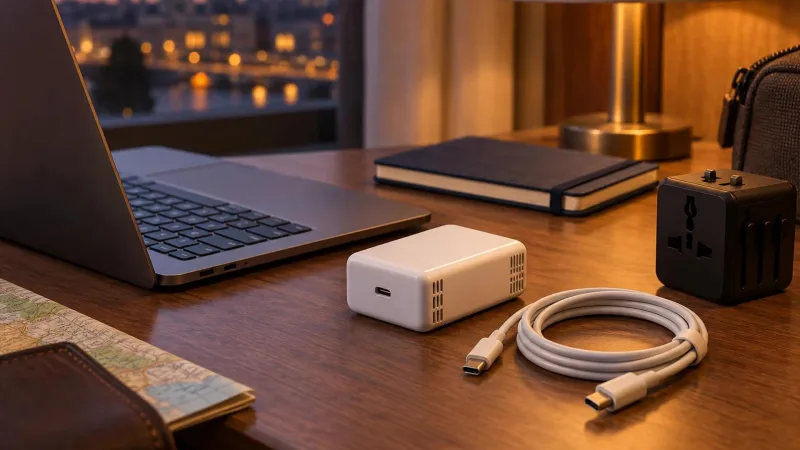
Singapore uses the Singapore dollar (SGD). Cards are widely accepted in hotels, shopping centres and many restaurants, but don't assume every small food stall or independent business accepts your foreign-issued card. Keep a modest amount of local cash for situations where electronic payment isn't available. For mobile connectivity, compare your home provider's roaming package with local tourist SIMs and compatible travel eSIMs. If you purchase a local prepaid SIM, be prepared for identification and registration requirements. English is widely used in transport, hotels and public services, so communication is generally straightforward for English-speaking visitors. Singapore uses Type G electrical sockets, the same three-rectangular-pin design used in the United Kingdom. Travellers from countries using other plugs should bring a suitable adapter.
Plan around the heat, not just the attractions
Singapore is warm and humid throughout the year, and a sunny morning can turn into a heavy afternoon shower. You don't have to abandon outdoor sightseeing, but it helps to be realistic about the weather. Start walking-heavy activities earlier when convenient, carry water and take breaks in shaded or air-conditioned places. A compact umbrella is useful for both sudden rain and strong sunshine. The Northeast Monsoon generally occurs from December to early March, while other parts of the year have their own rainfall and thunderstorm patterns. There isn't a guaranteed rain-free month. Singapore's public tap water is safe to drink, making a refillable water bottle a useful item to carry.
Local rules and safety worth knowing
Singapore has clear public-space rules, and visitors should pay attention to signs rather than relying on habits from home. Smoking is restricted in many public areas, and electronic vaporisers are prohibited. Do not bring vaping products into Singapore. Be considerate at places of worship, follow dress and photography instructions, and avoid disturbing people during religious activities. In crowded locations, keep ordinary valuables secure. Be cautious of suspicious messages or calls claiming to come from government agencies, especially if they ask you to transfer money or share banking information. Singapore's emergency numbers are 999 for police and 995 for fire, rescue or emergency ambulance services. The ScamShield helpline at 1799 provides scam-related assistance, not emergency response.
Five mistakes worth avoiding
- Paying for an SG Arrival Card through an unofficial website, even though official submission is free.
- Assuming the airport MRT operates through the night and leaving no backup after a late arrival.
- Tapping into public transport with a bank card and tapping out with a phone or another card.
- Booking a hotel without checking the actual walking route to a convenient MRT station.
- Trying to fit every famous attraction into one day without allowing for heat, rain, meals and breaks.
Your first-day arrival checklist
- Keep your passport, applicable visa and SG Arrival Card details accessible.
- Confirm your hotel address and the nearest suitable MRT station.
- Check whether trains will still be operating when you leave the airport.
- Choose a public transport payment method that works for your card and plans.
- Arrange mobile data or use airport Wi-Fi to access directions.
- Carry a little Singapore-dollar cash for smaller purchases.
- Save emergency contacts and keep your phone charged.
- Leave your first evening light enough to recover from the journey.
Singapore is an easy place to enjoy once you understand a few basics. You don't have to master every train line or plan every meal before arriving. Start with a straightforward airport transfer, choose a convenient base and explore neighbourhoods at a comfortable pace. Try local food, take time to look beyond the waterfront landmarks and don't be afraid to adjust your plans when the weather changes. A good first visit isn't about seeing everything. It's about giving yourself enough time to enjoy what you do see.
Singapore Official Entry Requirements →
Submit the Free SG Arrival Card →
SimplyGo — Public Transport Payment Guide →