
Japan rewards preparation, but a first trip does not need to be complicated. The main challenge is rarely finding things to see. It is deciding how many places to visit, understanding the different transport systems and making sure your arrangements work together. Tokyo's busy neighbourhoods, Kyoto's temples, Osaka's food districts and Japan's mountain and coastal regions offer very different experiences. Trying to fit everything into one journey can leave you spending more time transferring between stations and hotels than enjoying your destinations. This guide explains how to put together a realistic itinerary, prepare for arrival, use trains, choose accommodation, manage payments and stay connected. It also covers everyday customs and situations that can catch first-time visitors by surprise. The most useful starting point is simple: choose fewer destinations, understand the journey between them and keep room for experiences you have not planned
Start with a realistic travel route
Japan is larger and more geographically varied than its famous Tokyo–Kyoto–Osaka route suggests. Hokkaido has extensive natural landscapes and cold winters, central Honshu includes mountain towns and historic routes, and Okinawa has a subtropical island environment. The right itinerary depends on the time available and the experiences you value. For many first-time visitors, Tokyo and Kyoto make a practical starting combination. Tokyo offers large-city neighbourhoods, museums, shopping and modern Japanese culture. Kyoto provides historic districts, temples, gardens and access to nearby places such as Nara. Osaka adds a lively urban atmosphere and a different food scene, but it is close enough to Kyoto that a separate hotel stay is not always necessary. Rather than listing every attraction first, decide which cities will be your overnight bases. Then check the actual travel time and connections between them.
| Trip length | Possible approach | Planning consideration |
| 5–7 days | Tokyo with nearby day trips, or Kyoto and Osaka | Focus on one region rather than crossing the country repeatedly |
| 8–10 days | Tokyo and Kyoto, with optional Osaka or Nara visits | Two main bases can offer a good balance of sightseeing and travel time |
| 11–14 days | Tokyo, Kyoto/Osaka and one additional destination such as Hiroshima or Kanazawa | Add another region only if its transport and overnight arrangements make sense |
| More than two weeks | Explore additional regions, smaller towns or a special interest such as hiking or winter travel | Allow extra time for weather, regional transport and longer connections |
The most convenient itinerary is not necessarily the one with the shortest train journeys. A hotel change involves packing, checkout, getting to the station, travelling, finding the next accommodation and sometimes waiting until check-in. Several short travel days can become surprisingly tiring. Look at whether an attraction is better visited as a day trip rather than another overnight stop. Nara, for example, can often be visited from Kyoto or Osaka without moving hotels. Also consider your arrival and departure airports. Flying into the Tokyo area and departing from Kansai, or travelling in the opposite direction, may reduce unnecessary backtracking when suitable flight options are available.
Choose your travel season carefully
Japan experiences different seasons, but the weather varies substantially between regions. Spring brings cherry blossoms to many areas, although peak flowering depends on location and annual conditions. Autumn offers colourful foliage and, in many places, comfortable sightseeing weather. Summer can be hot and humid across much of the main island of Honshu. Rainy-season conditions, high temperatures and typhoons may affect outdoor activities or transport. Northern and mountain destinations can feel different from the major cities. Winter brings snow to northern Japan and mountain regions, creating opportunities for skiing and winter scenery. Other areas, including parts of the Pacific coast, may have relatively dry and sunny winter days. There is no single best month for every Japan itinerary. Match the season to your intended destinations and activities rather than relying on general nationwide recommendations.
- Spring: Popular for flowers and outdoor sightseeing. Book accommodation early in high-demand locations, but remember that blossom dates cannot be guaranteed.
- Summer: Prepare for heat, humidity and possible severe weather. Plan breaks and avoid scheduling demanding outdoor activities during the hottest periods.
- Autumn: Well suited to walking and sightseeing in many regions, with foliage timing varying by altitude and latitude.
- Winter: Consider snow, mountain transport conditions and shorter daylight hours. Pack for the actual region rather than assuming all of Japan is equally cold.
- Major holiday periods: New Year, Golden Week and the Obon period can bring heavy domestic travel demand. Verify reservations and transport availability well in advance.
Check entry requirements before departure
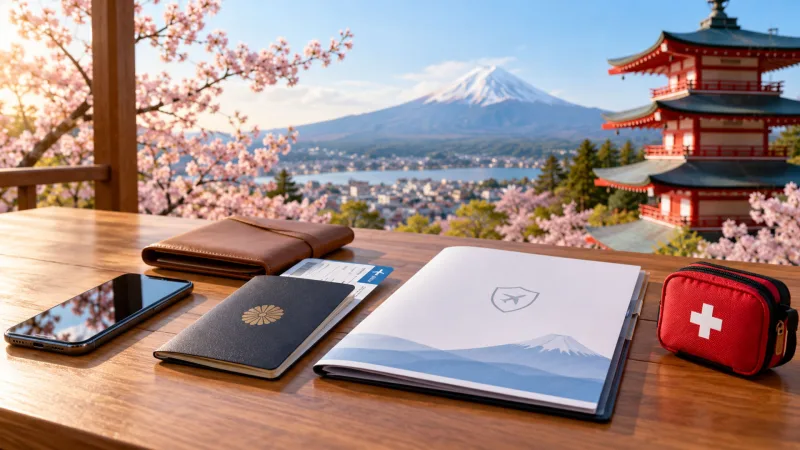
Japan's visa requirements depend on your nationality, passport or travel document, purpose of visit and sometimes your country of residence. Some travellers qualify for a short-stay visa exemption, while others must obtain a visa before travelling. Japan also has an official eVISA system for eligible applicants, but eligibility is not universal. The online application arrangements depend on the applicant's circumstances and the country or region where they reside. Check the Ministry of Foreign Affairs of Japan and the Japanese embassy or consulate responsible for your place of residence. Do not rely on another visitor's visa conditions or assume that tourist entry allows employment. A visa, where required, is permission to seek entry, not a guarantee of admission. The immigration officer determines landing permission and the authorised period of stay.
- Confirm visa or visa-exemption eligibility for your exact passport and travel purpose.
- Check your passport validity and any requirements of connecting countries or airlines.
- Arrange the appropriate visa before departure if one is required.
- Keep accommodation details, your intended itinerary and return or onward travel information accessible.
- Check the entry rules for any medication or controlled substances you plan to bring.
- Prepare an offline copy of important bookings, emergency contacts and applicable travel-insurance information.
- Recheck official guidance shortly before your journey in case requirements have changed.
Use Visit Japan Web and prepare for arrival
Visit Japan Web is a free official service operated by Japan's Digital Agency. It allows travellers to prepare supported immigration and customs information online before arrival. After creating an account, you can register traveller details, an intended arrival itinerary and the relevant declarations. The service then provides a code to display during supported airport procedures. Visit Japan Web is not a visa. It does not replace visa eligibility checks, passport requirements or decisions made by immigration officers. Japan Customs also provides paper customs-declaration procedures, so travellers should follow the available process at their arrival airport. Use the official Visit Japan Web website, and make sure you can access your account and arrival information when you land.
- Before flying, confirm that your passport, visa status and arrival information are correct.
- If using Visit Japan Web, register your arrival details and complete the applicable declarations.
- On arrival, follow airport signs for immigration and present your passport and any required supporting documents.
- Collect checked baggage and complete customs procedures, including declaring applicable goods.
- After clearing customs, arrange mobile connectivity, cash or transport tickets if still needed.
- Follow the route you planned to your accommodation rather than choosing transport solely from the first advertisement or ticket counter you see.
Choose the right airport transfer
| Arrival airport | Common transport choices | What to consider |
| Haneda Airport (HND), Tokyo | Keikyu Line, Tokyo Monorail, airport buses and taxis | The best connection depends on whether your accommodation is near Shinagawa, Hamamatsucho or another district |
| Narita Airport (NRT), Tokyo region | JR Narita Express, Keisei railway services, airport buses and taxis | Narita is farther from central Tokyo; compare your destination station rather than only the headline journey time |
| Kansai International Airport (KIX), Osaka region | JR airport services, Nankai Railway, airport buses and taxis | Connections differ for Namba, Osaka, Shin-Osaka and Kyoto; check which service suits your final destination |
After a long international flight, the simplest route may be more useful than the fastest route on paper. A journey involving several railway transfers and long station walks can be difficult with large bags or tired children. Check the final train departure if you arrive late. Airport buses, taxis or nearby accommodation may be more practical after rail services stop operating. Do not assume that a flight landing shortly before the last train provides enough time for immigration, baggage collection and customs. Before leaving the airport, save your hotel's address in Japanese, the nearest suitable station and the exact station exit where possible. Large Japanese stations can have multiple exits leading to very different streets.
Understand trains, IC cards and the Japan Rail Pass
Japan has an extensive railway network, but it is operated by different companies. JR services, private railways, metro operators and local buses may use separate ticketing systems and pricing rules. For urban sightseeing, rechargeable IC cards such as Suica, PASMO and ICOCA simplify many journeys. They can often be used on compatible trains and buses across multiple regions, as well as for small purchases at participating businesses. An IC card is not an unlimited travel pass. The correct fare is deducted from its balance, and some transport services still require a separate ticket or additional fare. Mobile IC cards are convenient on compatible devices, but physical cards remain a practical alternative. Long-distance trains, particularly Shinkansen services, involve different ticket and reservation arrangements from everyday metro travel.
| Transport option | Best use | What to check |
| Rechargeable IC card | Frequent city train, metro and compatible bus journeys | Regional compatibility, where to purchase or recharge, and any separate ticket requirements |
| Individual Shinkansen tickets | Travelling between selected cities such as Tokyo, Kyoto or Osaka | Fare, seat reservation, departure station, train category and baggage rules |
| Regional rail pass | Multiple eligible journeys within one particular region | Valid routes, participating operators, validity period and exclusions |
| Nationwide Japan Rail Pass | Eligible travellers taking several qualifying long-distance journeys | Compare total individual fares with the pass price and check restricted services |
| Local or highway buses | Rural areas, destinations without convenient railway access and some longer routes | Timetables, reservations, payment method and luggage allowance |
The nationwide Japan Rail Pass is not automatically the most economical option. Before buying one, calculate the individual fares for your proposed long-distance journeys and compare them with the applicable pass price. The pass has eligibility restrictions and does not cover every railway operator or train. In particular, using Nozomi or Mizuho Shinkansen services with a Japan Rail Pass requires a separate special ticket under the operator's conditions. Other private railway sections can also incur additional charges. If most of your trip is based in Tokyo and Kyoto with only one major intercity journey, individual tickets may be more suitable. A pass becomes worth examining when your itinerary involves multiple eligible journeys during its validity period. Plan the route first; choose the ticket product second.
Choose accommodation around your daily route
Where you stay can make a bigger difference to your first trip than whether the hotel is in the most famous neighbourhood. In Tokyo, being near a useful railway or metro station often matters more than staying beside a particular attraction. A location with straightforward access to your planned districts can reduce unnecessary transfers. In Kyoto, consider whether your itinerary depends mainly on buses, trains or walking, as historic sights are spread across the city. Japan has business hotels, international hotels, hostels, apartments, traditional ryokan and small guesthouses. Each serves a different travel style. A ryokan may include set meal times, traditional bedding and shared bathing facilities. A business hotel may be more convenient for a busy city itinerary, though room size and luggage space can be limited.
- Check the walking route from the nearest suitable station, including the correct exit.
- Confirm the actual room size, bed configuration and luggage-storage space.
- Review check-in and checkout times, especially when arriving early or late.
- If booking a ryokan, check whether meals are included and whether arrival times are fixed.
- For family or accessibility needs, confirm arrangements directly rather than relying solely on photographs.
- If changing cities, ask whether your accommodation can help arrange luggage forwarding and how long delivery will take.Check the walking route from the nearest suitable station, including the correct exit.
- Confirm the actual room size, bed configuration and luggage-storage space.
- Review check-in and checkout times, especially when arriving early or late.
- If booking a ryokan, check whether meals are included and whether arrival times are fixed.
- For family or accessibility needs, confirm arrangements directly rather than relying solely on photographs.
- If changing cities, ask whether your accommodation can help arrange luggage forwarding and how long delivery will take.
Handle money, meals and daily purchases confidently
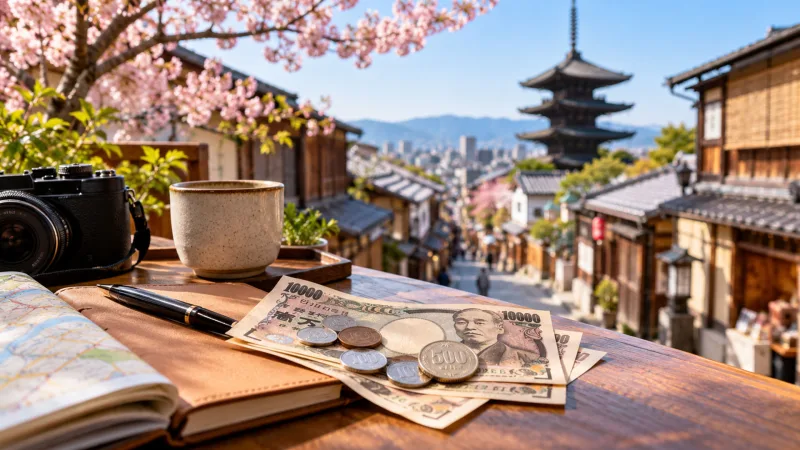
Japan has become increasingly convenient for card and contactless payments, especially in major cities. Large hotels, retailers, convenience stores and many restaurants accept international payment cards. Nevertheless, cash remains useful. Smaller restaurants, temples, rural businesses, local buses and certain ticket machines may not accept the payment method you normally use. Carry some Japanese yen rather than assuming your phone wallet will work everywhere. Check which ATMs support your international card and whether your bank charges withdrawal or foreign-exchange fees. Keep a backup card separate from your everyday wallet. Tipping is not generally expected at Japanese restaurants, hotels or in taxis. There is no need to add a gratuity simply because it is customary in your home country.
Eating in Japan can be straightforward even when you do not speak Japanese. Many restaurants offer picture menus, food displays or ticket machines where you choose and pay for a meal before sitting down. However, dietary restrictions require more preparation. Broths and sauces may contain fish-based dashi or other animal ingredients even when the visible dish appears vegetarian. If you have an allergy, carry a written explanation in Japanese and confirm ingredients directly with the restaurant. For vegetarian, vegan, halal or other restricted diets, research suitable restaurants near your accommodation in advance. Set-menu restaurants and ryokan may need notice of dietary requirements before arrival, and not every establishment can accommodate every request.
Arrange mobile data before you need directions
| Connectivity option | Advantages | Limitations |
| Travel eSIM | Can be prepared before arrival on compatible devices; no physical SIM swap | May be data-only; requires an unlocked and eSIM-compatible device |
| Prepaid physical SIM | Useful for compatible phones without eSIM; available through various retailers and airports | Requires a compatible unlocked phone; activation and identification conditions vary by product |
| Pocket Wi-Fi | Can connect several devices and be shared by a group | Extra device to charge, carry and return; rental conditions vary |
| International roaming | Convenient when already included in your home mobile plan | Data allowances, roaming charges and network performance depend on your provider |
| Public Wi-Fi | Useful at participating airports, hotels and public facilities | Not consistently available throughout a journey and unsuitable as your only connectivity plan |
Reliable data is particularly valuable in Japan because it helps with route changes, platform information, translation and finding the correct station exit. Before departure, check whether your phone is unlocked, whether the selected data product supports your device and how activation works. If you use an eSIM, understand which line will provide mobile data and whether your normal phone number remains active for calls or messages. Download offline maps for the areas you expect to visit and save important bookings locally. Keep a note of your accommodation address in Japanese so that you can show it to a taxi driver or ask for directions even if your connection stops working.
Understand everyday etiquette without overthinking it
- On public transport: Queue in designated places, keep phone conversations to a minimum and avoid blocking aisles or doors with luggage.
- At temples and shrines: Follow posted instructions, be respectful of ceremonies and observe photography restrictions.
- Inside homes and traditional accommodation: Remove your shoes where required. Slippers may be provided, but they may not be suitable for tatami flooring.
- In busy pedestrian areas: Avoid stopping suddenly in narrow walkways to take photographs or consult maps.
- At restaurants: Follow the establishment's ordering and payment system. Some places require payment at a counter, while others use ticket machines.
- In shared spaces: Follow local instructions about smoking, waste disposal and designated areas.
- When communicating: Simple polite expressions help. "Arigatou gozaimasu" means thank you, while "sumimasen" is useful for politely getting someone's attention or apologising.
If you visit an onsen, or Japanese hot spring bath, learn the bathing rules before entering. Visitors are generally expected to wash thoroughly before using communal baths, keep towels out of the water and follow the facility's clothing and privacy requirements. Some onsen restrict entry for people with tattoos, while others are tattoo-friendly or offer private baths. Check the individual facility's policy before booking rather than assuming one rule applies everywhere. Traditional customs are easier to navigate when you observe signs, ask staff if uncertain and remain considerate of other guests.
Prepare for weather, health needs and emergencies
| Region or travel style | Practical preparation |
| Tokyo, Kyoto and Osaka in summer | Prepare for heat, humidity, sudden rain and long periods of walking |
| Hokkaido or mountain regions in winter | Check snow, temperature, road conditions and possible transport disruption |
| Okinawa and southern coastal destinations | Monitor tropical weather, sea conditions and possible typhoons |
| Rural areas and hiking routes | Check local transport frequency, daylight, trail conditions and mobile connectivity |
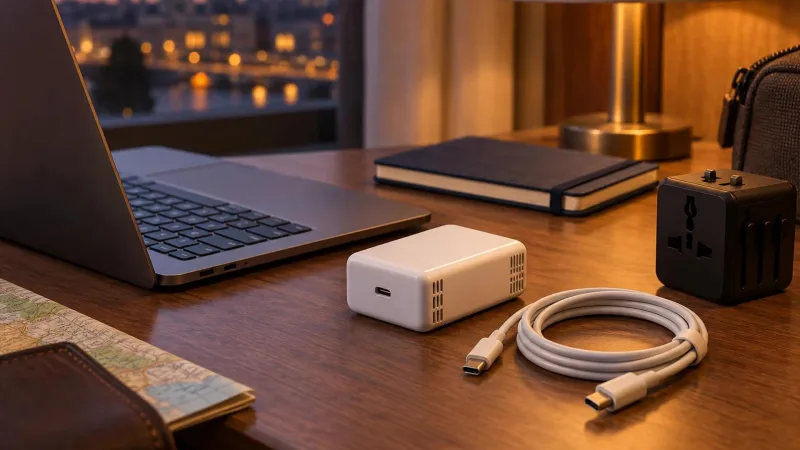
Japan is exposed to natural hazards including earthquakes, typhoons, heavy rainfall, tsunamis and volcanic activity. These risks should not prevent a well-planned trip, but they make it important to know where to find reliable warnings. On arrival at your accommodation, identify the emergency exits and pay attention to instructions from local authorities. During an earthquake, follow staff directions and protect yourself from falling objects. If a strong earthquake affects a coastal area, move away from the shore and follow tsunami evacuation instructions. Keep your phone charged, maintain access to essential medication and save relevant emergency contact details. Travellers with particular medical needs should check healthcare and prescription arrangements before departure.
A practical rhythm for your first Japan trip
For a trip of approximately one week to ten days, consider dividing your time between Tokyo and the Kyoto–Osaka region rather than adding several distant destinations. Begin with a few nights in Tokyo. Explore different neighbourhoods, museums or markets without trying to cover opposite sides of the city in a single day. If your schedule allows, consider a day trip based on your interests. Travel to Kyoto for a second base, grouping nearby temples, gardens and historic streets into manageable days. Osaka or Nara can be considered as additional visits without necessarily changing accommodation again. With a longer trip, you could add Hiroshima, Kanazawa or another region that genuinely interests you. The extra destination should be chosen because it adds something important to the journey—not because you feel required to visit as many cities as possible. Leave your arrival evening relatively simple, and avoid filling the day before an international flight with complicated travel.
Common first-time mistakes and how to avoid them
- Booking too many cities: Choose overnight bases first and check whether nearby destinations work better as day trips.
- Buying the Japan Rail Pass automatically: Calculate individual train fares and verify pass restrictions before paying.
- Confusing IC cards with unlimited passes: Rechargeable transport cards deduct fares and do not replace every type of train ticket.
- Ignoring station size: Allow time for finding platforms, exits, transfers and luggage facilities in large stations.
- Relying only on bank cards: Carry some yen and check payment methods at smaller businesses.
- Overlooking baggage rules: Measure large suitcases and reserve suitable train storage where required.
- Assuming mobile data will work immediately: Confirm activation before leaving the airport and save maps offline.
- Planning around perfect weather: Leave room to move outdoor activities if rain, heat or transport disruption affects the day.
- Arriving without checking local rules: Read accommodation, temple, onsen and photography instructions before using facilities.
- Treating all regions alike: Tokyo, Kyoto, Hokkaido, Okinawa and rural Japan have different travel conditions and transport requirements.
Final checklist before your first trip
- Confirm the official visa rules for your passport and purpose of visit.
- Check your passport and any medication-import requirements.
- Complete applicable immigration and customs preparations, including Visit Japan Web if you choose to use it.
- Finalise your arrival airport and the route to your first hotel.
- Book accommodation close to transport that fits your planned activities.
- Compare intercity rail tickets, regional passes and the nationwide rail pass before choosing.
- Confirm any necessary attraction, train or restaurant reservations.
- Arrange an appropriate mobile-data option and save maps offline.
- Carry a bank card, backup payment method and access to Japanese yen.
- Check luggage size and transport restrictions.
- Prepare for the weather in the specific regions you will visit.
- Save emergency numbers, insurance information and important booking details.
- Leave time for unplanned stops, slower days and changes of mind.
Your first visit to Japan does not need to include every famous destination. A well-planned route, dependable transport arrangements and a basic understanding of local practices make it easier to explore with confidence. Use official sources for changing requirements, keep your itinerary realistic and let the different neighbourhoods, food traditions and landscapes shape the experience as you travel. The goal is not to complete a checklist of Japan's attractions. It is to have enough preparation that you can enjoy the journey without constantly solving avoidable problems.
Explore Japan: Country Travel Essentials →
Japan Travel Costs & Practical Tips →
Check Japan's Official Visa Requirements →
Prepare Your Arrival with Visit Japan Web →