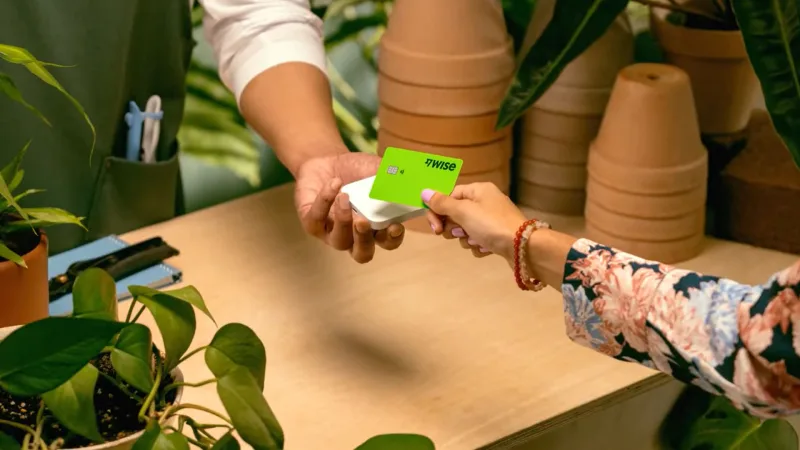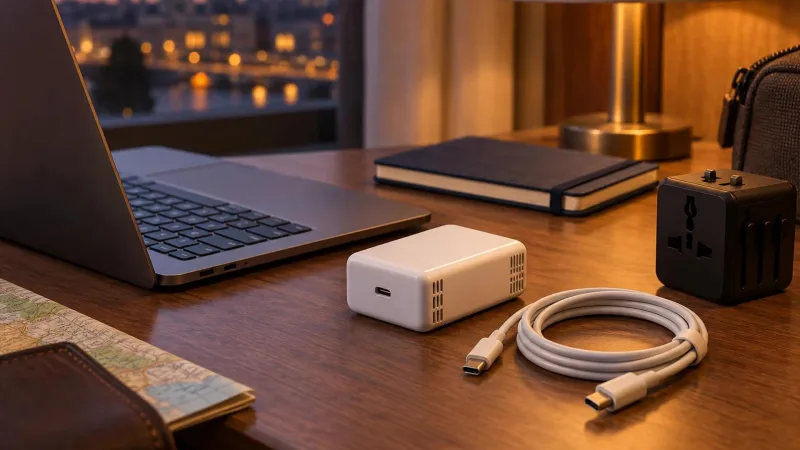

Imagine arriving in a new country. You've checked into your hotel, found a lovely little café and you're ready to explore. Your hotel accepted your card without a problem, but the small food stall you visit next asks for cash. Later, an ATM offers to convert your withdrawal into your home currency, and you're unsure which option to choose. These are small moments, but they can make managing money abroad unexpectedly confusing. The good news? You don't need to carry a wallet full of foreign currency or depend entirely on your bank card. With a little preparation, you can enjoy the convenience of modern payments while keeping enough flexibility for the places where cash still matters.
Whether you're exploring European cities, visiting Asian street markets, relaxing on an island or travelling through smaller towns, the smartest approach is usually a combination of payment methods. This guide will help you decide when to pay by card, when cash makes more sense, how to avoid unnecessary charges and what to do if your usual payment method suddenly stops working.
Cash vs card: which should you use?
There is no universal winner. Cards can make larger purchases convenient and easier to track, while cash remains valuable when electronic payments are unavailable, inconvenient or subject to additional charges. Think about the places you'll actually spend money. A large hotel may accept several international card networks, while a neighbourhood café, taxi, market stall or rural guesthouse may have different payment arrangements. Even within the same country, acceptance can vary significantly between major cities and smaller communities.
| Situation | Usually worth considering | Why |
| Hotels and larger accommodation | Credit or debit card | Convenient for reservations, payments and transaction records; check deposit rules |
| Restaurants and shopping centres | Card | Often convenient where international cards are accepted |
| Street markets and small food stalls | Local cash | Some sellers may not accept foreign-issued cards or digital payments |
| Public transport | Accepted transport card, bank card or cash | Payment rules vary by city, operator and ticket type |
| Rural towns and remote destinations | Cash plus a backup card | ATMs and electronic payment facilities may be limited |
| Car rentals and hotel security deposits | Eligible credit card where required | Some providers require a credit card or place temporary holds on funds |
| Emergencies | Accessible backup funds | A second payment method helps if your primary option fails |
Treat this table as a starting point, not a rule for every country. Some cities are almost entirely convenient for contactless payments, while other destinations require cash for many ordinary purchases. Before leaving, check your destination's accepted payment methods and ask your accommodation about anything unusual. That small amount of research can save you from trying to find an ATM when you're tired, carrying luggage or rushing to catch a connection.
Debit card, credit card or travel card: what's the difference?

Debit cards: useful for accessing your own money
A debit card usually spends money directly from your linked bank account. Depending on the card and network, it may be suitable for purchases, contactless payments and ATM withdrawals abroad. It can be a practical choice for withdrawing local currency, particularly if your bank offers favourable international withdrawal terms. The main thing to watch is fees. Your bank may charge for foreign transactions, overseas ATM withdrawals or currency conversion. The ATM operator may add a separate charge. Debit cards can also be inconvenient for certain security deposits. If a hotel or car rental company places a temporary hold, part of your available bank balance may be unavailable until the hold is released.
Credit cards: convenient for purchases and reservations
Credit cards can be useful for hotel bookings, transport reservations, larger purchases and merchants that require a credit facility for a deposit. Some cards offer foreign-transaction-fee waivers, rewards or additional travel-related benefits. These vary significantly between issuers and countries, so the features advertised for one card may not apply to another. A credit card is not automatically cheaper than a debit card. Check the exchange rate arrangements, foreign transaction fees, annual costs and interest terms. If you carry a balance, interest charges may outweigh other benefits. Choose a card that fits your financial situation rather than selecting one simply because it is marketed for travel.
Prepaid and multi-currency cards: useful, but check the details
Some travel-oriented prepaid and multi-currency cards let you hold, exchange or spend money in different currencies. Depending on the product, this can simplify budgeting or help you manage when currencies are converted. However, not all products work the same way. Some charge for loading funds, withdrawing cash, converting currencies or making transactions under certain conditions. There may also be limits, unsupported currencies or restrictions on using the card for deposits. A card advertised as having no foreign transaction fee may still involve an exchange-rate spread or other charges. Check the full fee schedule rather than relying on a single marketing claim. For many travellers, a suitable everyday card and a reliable backup may be enough. A specialist travel card is an option, not a requirement.
The payment choice that could save you money: local currency or home currency?
One of the easiest mistakes to make abroad happens at the payment terminal. You are paying for a meal or withdrawing money from an ATM. The screen asks whether you'd like the amount converted into your home currency. At first, this seems helpful. Seeing a familiar currency makes the cost easier to understand. But the conversion service may apply a different exchange rate and additional charges. This is known as Dynamic Currency Conversion, or DCC. It lets the merchant or ATM's conversion provider determine the amount in your home currency instead of allowing the card network and your issuer to handle the conversion.
Imagine you're visiting Japan and your restaurant bill is in Japanese yen. The terminal offers two choices: pay in yen or pay an amount already converted into your home currency. If you choose the converted amount, the terminal's provider sets the conversion terms. The displayed total may include a markup. If you choose yen, your card's normal currency-conversion arrangements apply. Your bank may still charge foreign transaction fees, but you avoid accepting that separate merchant-provided conversion. For most travellers, paying in the local currency is the sensible default. Always review any disclosed rates or charges, since the final cost depends on your card terms.
The hidden costs travellers should understand
Two cards can produce different final charges for the same purchase. The difference may come from the exchange rate, the bank's fee schedule, the payment network or the merchant's conversion offer. Similarly, withdrawing cash can involve costs from more than one provider. An ATM may show its own fee, while your bank adds a separate overseas withdrawal or foreign transaction charge. Understanding where a fee comes from makes it easier to compare options before you travel.
| Potential cost | When it may appear | What to check |
| Foreign transaction fee | Card purchase or withdrawal involving another country or currency | Your card issuer's international fee schedule |
| Currency conversion spread | When one currency is exchanged for another | The final rate offered compared with a reliable reference rate |
| ATM operator fee | When using a local ATM | Fee displayed before withdrawal confirmation |
| Bank ATM withdrawal fee | When your bank processes an overseas withdrawal | Your bank's charges and any partner-network arrangements |
| Dynamic Currency Conversion | When a merchant or ATM offers your home currency | Conversion rate, markup and option to decline |
| Credit card cash advance | When withdrawing cash using a credit card | Cash advance fee, interest rate and when interest begins |
| Cash exchange commission | When exchanging physical banknotes | Total local currency received after all fees |
Do not judge an exchange service only by the words "zero commission." A provider can charge no separate commission while offering a less favourable exchange rate. The useful comparison is how much local currency you receive for a given amount of your own money, after all charges. A currency converter can help you understand the approximate market value before making a decision. Remember that a reference rate is not necessarily the exact rate your bank, card network, ATM or exchange counter will apply.
How much cash should you carry abroad?
There is no perfect cash amount for every traveller. A city break with reliable card acceptance may require only enough cash for occasional small purchases. A rural journey, remote island stay or destination with limited ATMs may require more advance planning. Instead of choosing an arbitrary amount, list the expenses you expect to pay in cash: transport on arrival, small meals, market purchases, tips where customary, and any accommodation or activity that requires it. Carry enough to cover your realistic needs, with a modest contingency, but avoid travelling with unnecessarily large sums.
- Carry some usable local cash if you expect to need it soon after arriving.
- Choose manageable denominations that small businesses can accept and change.
- Keep your main cash supply secure rather than carrying everything in an easily accessible pocket.
- Divide money thoughtfully between a day wallet and a secure backup location.
- Reassess your cash needs before travelling to remote areas with limited banking facilities.
- Check customs rules for carrying, importing, exporting or declaring currency.
Should you exchange money before departure or after arrival?
Exchanging a small amount before departure can provide peace of mind, especially if you arrive late, need local cash immediately or are unsure whether nearby ATMs will accept your card. However, changing all your travel money in advance is not always necessary or economical. Rates and charges differ between banks, exchange businesses and destination-country ATMs. When comparing options, look at the amount of local currency you'll receive after fees. Consider convenience, security and availability as well as the advertised rate. Airport exchange counters can be convenient, but do not assume they offer the best value. If you need cash immediately, exchanging only what you need for the first part of the journey may be reasonable.
Be careful with unfamiliar exchange services and unusually attractive offers. Use legitimate, reputable providers and check the currency and amount before leaving the counter. Some countries restrict currency exchange, regulate who may provide it or impose rules on taking their currency across borders. Check destination-specific requirements before carrying significant amounts. If you have unused foreign currency near the end of your trip, consider whether you can use it for ordinary purchases or exchange it legally and economically. Small leftover amounts are often inconvenient to convert back.
How to withdraw cash safely from an ATM abroad
ATMs can be a practical way to obtain local currency, especially where your debit card has reasonable withdrawal terms. But not every ATM charges the same fees, and some machines may not accept your card. Before travelling, identify your bank's international networks, withdrawal limits and charges. At your destination, prefer machines operated by established banks or located in well-managed, secure premises. There is no need to withdraw your entire travel budget at once. Equally, repeated tiny withdrawals can become costly if a fixed fee applies each time.
- Find an established bank-operated ATM in a suitable location.
- Check that its supported card network matches your card.
- Look for signs of tampering around the card slot or keypad.
- Shield your PIN and keep your belongings secure.
- Review the withdrawal amount and any operator charges.
- If offered currency conversion, generally choose the local currency.
- Cancel the transaction if the charges or instructions are unclear.
- Collect your card and cash, and verify the transaction in your banking app when possible.
A hotel deposit is different from a normal card payment
Hotels, car rental companies and some other travel businesses may place a temporary authorisation hold on your card. This reserves access to a certain amount while the provider confirms the booking or protects against additional charges. The hold is not necessarily the final payment. If you're using a debit card, the reserved funds may reduce the money available in your bank account until the hold is released. A credit card hold can reduce your available credit instead. Some rental companies or accommodations require a credit card in the traveller's name, even if they accept other methods for the final bill. Before arriving, check the provider's accepted card types, deposit amount, release conditions and name-matching requirements. This is particularly important when travelling on a tight budget.
Your destination and travel style should shape your money plan
A single payment strategy will not suit every destination. In a major business district, contactless payments may be convenient for almost every purchase. A few hours away, a small guesthouse, local bus, village shop or island boat operator may rely mainly on cash or locally supported payment systems. Even where QR-code payments are common, they may require a domestic banking account or identification that short-term visitors do not have. Rather than assuming that a country is completely cashless or entirely cash-based, research the areas and services on your actual itinerary.
- Large cities: Check contactless payment acceptance, transport-card requirements and whether small merchants accept foreign cards.
- Markets and street-food areas: Keep some small-denomination cash if local sellers do not consistently accept your payment methods.
- Remote and rural destinations: Check ATM access, power and connectivity reliability, and any cash-only transport or accommodation requirements.
- Multi-country journeys: Confirm that your cards work in each country and avoid converting large sums into currencies you'll need for only a short time.
- Families and groups: Avoid relying on one person's card or phone for every payment. Make sure another trusted traveller has a usable backup.
- Longer trips: Monitor your available funds, recurring payments and currency-conversion charges over time.
Keep your money safe without making travel stressful
One of the most useful habits is separating your payment methods. If you carry every card and all your cash in one wallet, losing that wallet can create a serious problem. Keeping an accessible everyday wallet and a securely stored backup reduces that risk. Enable transaction notifications where available and keep your card issuer's genuine emergency contact details accessible. Use a secure method to access your banking app, and avoid sharing account credentials or verification codes. Also remember that payment-card protections, reimbursement rights and dispute procedures differ by country, bank and card product. Report suspected misuse promptly rather than assuming every unauthorised transaction will be automatically refunded.
- Carry at least one practical alternative to your primary payment method.
- Keep backup cards and emergency cash separate from your everyday wallet.
- Enable international transactions and any needed card controls before departure.
- Use transaction alerts to identify unfamiliar activity.
- Keep your card issuer's support details somewhere accessible if your phone is lost.
- Avoid exposing cash or entering card details into unfamiliar payment links.
- Use banking security features such as device locking and multi-factor authentication.
- Check how to freeze, block or replace a card while abroad.
What if your card gets declined, blocked or lost?
A declined transaction does not always mean you have insufficient money. Your bank may be checking unusual activity, the merchant may not accept your card network, or an ATM may have restrictions or temporary technical problems. If a card is declined, avoid repeatedly attempting the same transaction without understanding the reason. Check your banking app or contact your issuer through an official channel. If a card is lost or stolen, freeze or block it immediately, review recent transactions and follow the issuer's reporting process. Use your backup payment method while replacement or other assistance is arranged. If the situation involves theft, follow local police reporting procedures where appropriate. Keep documentation that may be useful for your bank or insurer.
Build your travel-money plan in five minutes
- Check the destination: Find out whether cards are commonly accepted and which payments may require cash.
- Review your cards: Compare international purchase fees, ATM charges, available networks and withdrawal limits.
- Choose your primary method: Use a card with suitable terms for your expected purchases.
- Arrange local cash: Prepare a manageable amount for arrival and likely cash-only expenses.
- Set up a backup: Keep another usable card or payment method in a different secure location.
- Understand currency conversion: Remember that paying in the destination's local currency generally avoids the merchant's DCC markup.
- Check major reservations: Confirm deposit and card requirements with hotels, car rentals and other relevant providers.
- Prepare for problems: Save banking support information, enable alerts and know how to freeze your card.
Frequently asked questions about travel money
Is it better to travel with cash or a debit card?
For many destinations, taking both is more practical than choosing one. A debit card can help you access local currency and pay at compatible merchants, while cash is useful for smaller businesses or situations where cards are not accepted. Compare your bank's overseas fees and research local payment practices before departure.
Should I choose my home currency when paying abroad?
Usually, no. When a foreign merchant or ATM offers to convert a payment into your home currency, the service may include an unfavourable exchange rate or additional charges. Choosing the local currency generally allows your card network and issuer to perform the conversion instead. Your own bank's fees may still apply.
Can I use the same card in every country?
Not necessarily. Card acceptance depends on the destination, merchant, network, bank and sometimes government or provider restrictions. Some businesses accept only local payment systems, and certain cards are not enabled for international use. Check each destination and your issuer's rules, particularly for multi-country trips.
Is a travel card always cheaper than a normal bank card?
No. Some travel cards offer useful exchange and spending features, but their overall costs depend on exchange rates, fees, limits and how you use the product. An ordinary bank card with favourable international terms may be equally suitable or better for some travellers. Compare the total expected cost rather than a single advertised feature.
What should I do with leftover foreign cash?
If you expect to return to the same country, keeping a small amount may be convenient where legally permitted. Otherwise, you can spend it on legitimate final purchases or compare authorised exchange options. Avoid accumulating unnecessarily large leftovers, as converting them back may involve unfavourable rates or charges. Check any currency import or export restrictions.
Travel with confidence, not a wallet full of worries
Paying for things abroad should be a small part of your journey, not something you spend the entire trip worrying about. The goal is not to avoid cash completely or to find a card that promises to work perfectly everywhere. It is to understand the available options, recognise unnecessary charges and keep enough flexibility to handle ordinary travel situations. Use cards where they are convenient and accepted. Keep cash where it genuinely helps. Know the cost of accessing either, and always have a backup. A little preparation before departure means fewer awkward payment moments and more attention for the experiences that brought you there in the first place.